
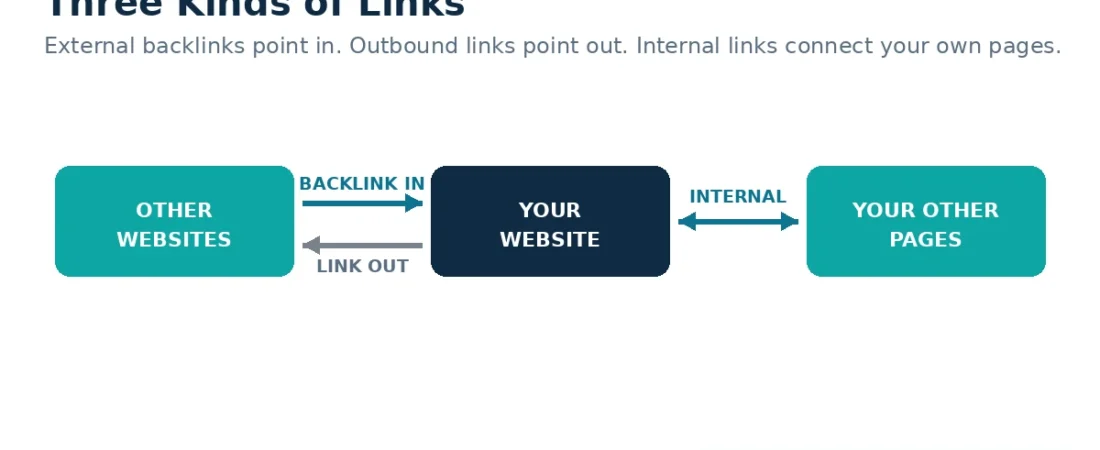
External backlinks are links that sit on other websites and point to pages on your site. For example, a blogger cites your guide, a directory lists your business, or a partner links to your tool. Each link acts as a public reference that search engines can follow and weigh.
This guide explains external backlinks in plain language, from the basic definitions to a full profile check. First, you will separate the four link types that people often confuse. Next, you will see how search engines find and judge these links. Finally, you will learn practical ways to earn links that genuinely fit your site.
What External Backlinks Are
External backlinks point from one domain to a different domain. The linking site and the receiving site belong to different owners, and that independence gives the link its value. In contrast, a link between two pages of your own site never leaves your domain.
People also call these links inbound links or incoming links, because traffic and link signals flow inwards. Writers earn them when other sites find their content worth citing. However, not every mention counts, because a plain text mention without a clickable link passes no link signal at all.
The Four Link Types You Need to Tell Apart
Inbound External Backlinks
Inbound external backlinks are the subject of this guide. Another site publishes a page, places a link inside it, and sends readers to you. For example, a local newspaper might link to your event page, or a supplier might list you as a stockist.
Outbound External Links
Outbound external links run in the opposite direction. You place them on your own pages, and they send your readers to someone else. In fact, good outbound links help readers reach sources, tools and further reading. They also show editors that you cite your evidence with care.
Internal Links
Internal links connect pages inside one domain. They guide readers from a guide to a product page, or from a blog post to a contact form. Also, they help search engines understand which of your pages matter most. Internal links support a site, but they never replace links from other sites.
Referring Domains
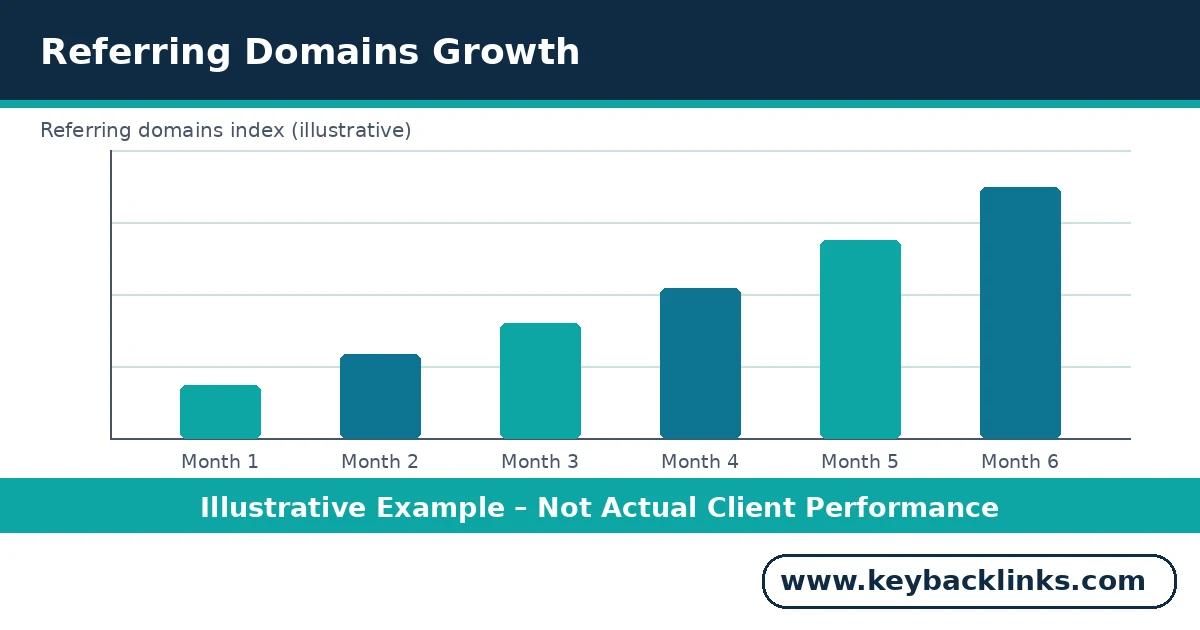
A referring domain is any single website that links to you at least once. One domain can hold one backlink or one hundred backlinks. Therefore, the count that usually matters most is unique referring domains, not the raw total of links.
Ten links from ten different relevant sites usually signal broader trust than fifty links from one site. The chart below shows how a healthy referring domain count can grow over time on a real campaign.
How External Backlinks Are Discovered and Evaluated
Search engines discover links by crawling the web. Their crawlers follow links from page to page and record each connection in a huge index. Then their systems weigh factors such as the linking page, the surrounding text and the link position.
You can see part of this picture yourself. Google lists your top linking sites and linked pages in the Search Console Links report. Third-party tools build their own indexes by crawling the web too, so their counts often differ from Google and from each other.
In fact, evaluation goes far beyond counting. A link from a relevant, trusted page inside useful content carries more weight than a link in a footer on an unrelated site. In short, engines look for evidence that real people value the page that receives the link.
Followed Links and the rel Attributes
A standard link without extra attributes is a followed link. It can pass ranking signals from the linking page to your page. Most natural editorial links work this way, because editors add them simply to help their readers.
Some links carry a rel attribute that changes how Google treats them. Since September 2019, Google treats rel=”nofollow”, rel=”sponsored” and rel=”ugc” as hints about a link rather than strict orders. The three attributes still matter, because they tell Google why the link exists.
Use rel=”sponsored” for any paid placement, advert or sponsored post. Use rel=”ugc” for links inside user-generated content such as comments and forum posts. Above all, remember that paid links must carry a qualifier, because unmarked paid links break Google spam rules and can draw penalties.
Contextual and Editorial Backlinks
A contextual backlink sits inside the main body of a page, surrounded by relevant text. An editorial backlink is one that an editor chose freely, without payment or pressure. The strongest links are usually both contextual and editorial at once.
Indeed, placement inside useful text carries weight for a simple reason. The surrounding sentences tell search engines what the linked page is about. Also, readers actually see and click links that appear inside an argument, a tutorial or a resource list.
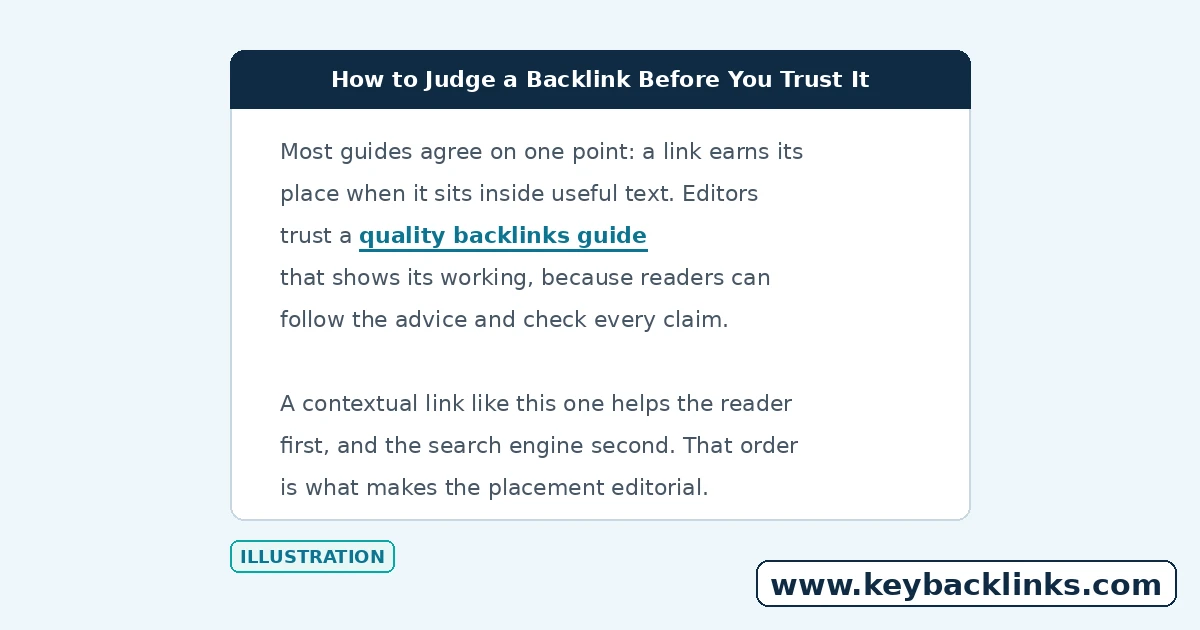
Example: a gardening blog explains soil testing and links the words “soil testing kit” to a supplier guide. The sentence helps the reader, the anchor describes the target, and the link feels natural inside the lesson.
Relevance, Authority Signals and Link Placement
Relevance is the first quality test. A link from a site in your field, or from a page about your topic, fits naturally and reads as a genuine recommendation. In contrast, a link from an unrelated site with no topical connection raises fair questions about how it got there.
Authority signals, meanwhile, come from the linking site itself. Busy sites with their own strong link profiles, real audiences and careful editorial standards pass more confidence. Placement matters too, because links near the top of the main content usually count for more than links buried in sidebars or footers.
One warning matters here. Vendor scores such as Domain Rating or Trust Flow come from third-party tools, not from Google. They can help you compare sites quickly, but they are not Google scores and they never decide rankings on their own. Treat them as rough guides, never as verdicts.
How to Analyse an External Backlink Profile
A backlink profile analysis reviews every link that points at your site and judges the overall pattern. Our backlink profile analysis guide walks through the full routine step by step. The table below sums up the checks that matter most.
Run this check every month or two, and record the results in one simple sheet. Trends therefore tell you far more than any single snapshot. Also, compare your profile with close competitors, because the gap between profiles often explains the gap in rankings better than any single metric.
How to Discover Competitor Backlink Opportunities
Competitor research shows which sites already link to businesses like yours. Start with two or three close competitors, then list their referring domains from a backlink tool or the Search Console data they share in case studies. Our competitor backlink analysis guide explains the method in full.
Next, sort the list by fit rather than by score. Resource pages, local directories, trade publications and partner blogs often accept contributions or listings. Then ask a simple question for each site: what did the competitor publish that earned this link, and can we publish something more useful?
Never copy a competitor profile link for link. Some of their links will be weak, paid or accidental. Instead, treat their profile as a map of your market, and choose only the roads that suit your site.
Common Backlink Mistakes
First, the most common mistake is buying volume. Hundreds of cheap links from unrelated sites rarely help, and they can leave a pattern that looks manipulative. Quality and relevance beat raw counts in almost every real profile.
Furthermore, another mistake is ignoring relevance while chasing a single vendor metric. A high score on an unrelated site helps less than a modest score on a site your customers actually read. Similarly, demanding exact-match anchor text everywhere makes a profile look engineered rather than earned.
Finally, many owners never check their profile at all. Links disappear when pages move, sites close or partners redesign. A short monthly review catches losses early and keeps your picture of the profile honest.
Practical Strategies for Earning Relevant Links
Earning external backlinks starts with useful content. Original research, clear tutorials, free tools and honest comparisons give other sites a reason to cite you. Publish fewer, stronger pieces, and keep each one updated so it stays worth linking to.
Moreover, digital PR adds reach to that content. A short, relevant story or dataset can earn coverage from journalists and bloggers in your field. Guest contributions work too, when you write genuinely helpful articles for sites your audience reads and link back only where the link helps the reader.
Reclamation recovers value you already earned. Search for unlinked brand mentions and ask politely for a credit link. Also, find broken links on relevant sites that once pointed to useful pages, and offer your matching page as a replacement. Both tactics are slow, honest and cumulative.
How KeyBacklinks Can Help
However, some teams prefer to hand this work to specialists. KeyBacklinks offers professional backlink analysis, competitor backlink research and ethical link acquisition for businesses that want a planned approach. You can see the full range on our backlink services page.
A sensible first step is a backlink profile review. The review maps your referring domains, flags weak or risky patterns, and lists the competitor gaps worth closing first. If that sounds useful, request a backlink profile review and tell us a little about your site and your market.
Frequently Asked Questions
Do all external backlinks improve rankings?
No. A link helps only when it comes from a real, relevant page that readers trust. Links from spammy or unrelated sites may count for nothing, and manipulative patterns can harm a site instead.
How many referring domains does a site need?
In short, there is no fixed number. A small local business may compete well with links from a few dozen relevant local and trade sites. Judge your profile against close competitors in your own market, not against national brands.
Are nofollow links worthless?
No. A nofollow link on a busy, relevant page can still send real visitors who later buy, share or link to you. Since 2019, Google also treats the attribute as a hint, so such links may carry some weight in some cases.
How often should I check my backlink profile?
Check it every month or two in normal times. Check sooner after a redesign, a migration or a sudden traffic change, because those events often break or move links without anyone noticing.
Conclusion
External backlinks remain one of the clearest public signals that other sites value your work. They come from independent sites, sit inside real content, and grow from useful pages that people choose to cite. Raw totals matter far less than unique referring domains, relevance and honest placement.
Start with a clean profile check, then study your competitors and earn links with content worth citing. Keep the work steady and ethical, and let each new link come from a page you would proudly show a customer.