
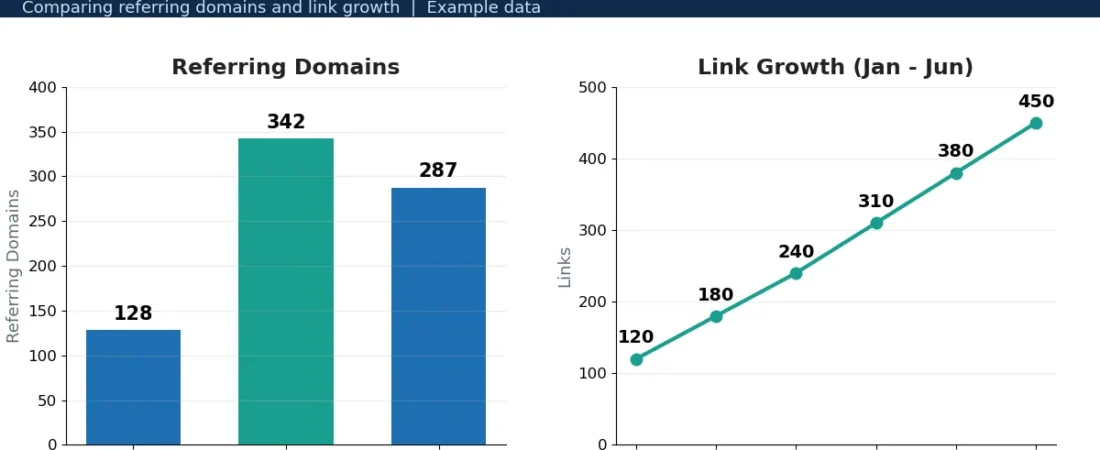
Competitor backlink analysis is the process of studying the links that point to rival websites. Then you use what you find to plan your own link work. First, you choose a small set of real rivals. Next, you compare their link profiles with your own. Then, you look for the gaps and the prospects worth earning.
This guide gives you a repeatable process for finding competitor backlinks and deciding what to do next.
What Competitor Backlink Analysis Is
Competitor backlink analysis looks at who links to your rivals, which pages earn those links, and why those pages earned them. A rival may earn links from resource pages, news stories, tools, guides, or partner sites.
The goal is not to copy every link a rival has. Copying a whole profile is a poor plan, because some of those links may be old, weak, or off topic. The goal is to find the links that fit your site, your pages, and your audience. Then you can earn similar links with better content or a better page.
A useful analysis answers four questions. Which sites link to your rivals? Which pages attract the most links? Which links do you not have yet? Which missing links are worth pursuing?
What It Can and Cannot Tell You
A backlink tool can show you a useful picture, but not everything. Most tools use their own crawler, so their index is a sample, not a complete record. As a result, a tool may miss a new link, show a link that no longer exists, or count links in a different way from another tool.
Search Console also has a clear limit here. It reports link data only for a property you can access, so it cannot show you a rival’s links. To study rivals, you need a third-party backlink index. The Google Search Console Links report is still useful for your own site as a baseline to compare against.
A link count alone tells you very little. The mix matters more than the total. Ten relevant links from trusted pages in your topic can matter more than one hundred links from unrelated pages.
Finally, do not treat a third-party score as a verdict. Scores are estimates from one tool, so use them as a starting point, then check the source page yourself.
How to Pick the Right Competitors
Start with three to five rivals. That range is small enough to study in depth and large enough to show patterns. Too many makes the list hard to review. If you pick only one, you may copy its weak points as well as its strengths.
Choose rivals that serve the same audience and compete for the same topics. A site that ranks for your target pages is a useful rival, even if it is not a direct business rival. On the other hand, a huge site in a different market is a poor rival. Its links may come from brand fame, not from content you can match.
Pick a mix if you can: one rival close to your size, one ahead of you, and one focused on the same niche.
Before you export any data, write down the pages you want to win with, or you will end up with a long list and no clear next step.
Competitor Backlink Analysis: A Step-by-Step Process
Follow these steps in order, and do not skip ahead to outreach before checking the prospects.
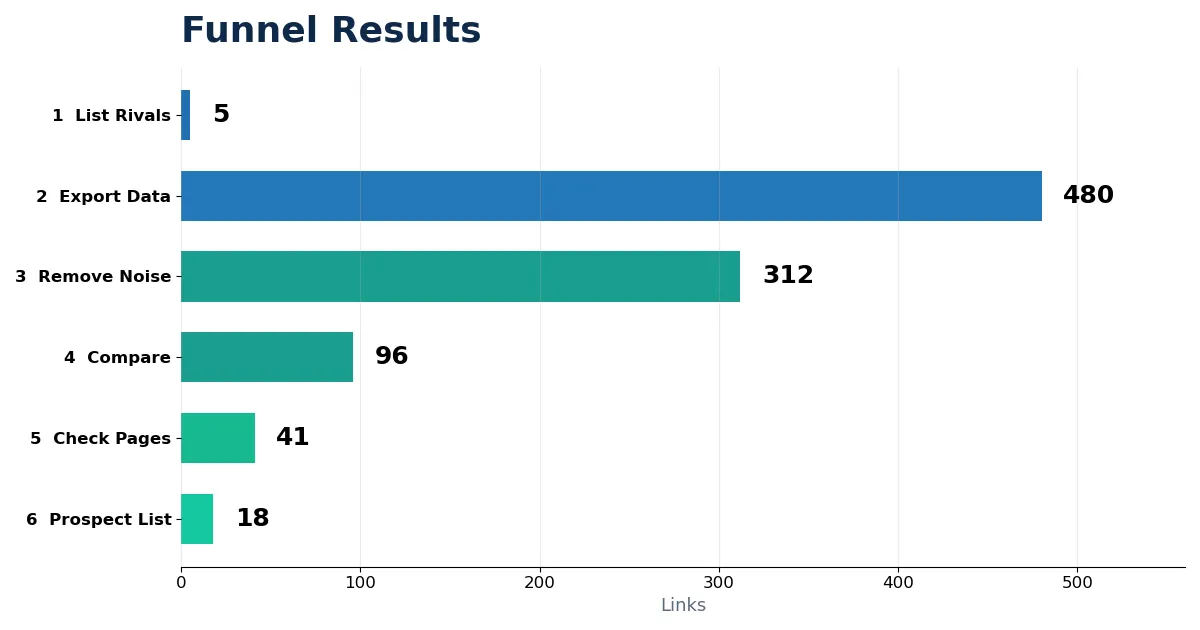
Step 1: List Your Rivals and Target Pages
Write down three to five rivals and one target page on your site for each topic you want to study. Then record the rival pages that compete with yours. This short list keeps the work focused and makes the later comparison fair.
Step 2: Export the Link Data
Use a third-party backlink tool to export links for each rival domain or page. Export the source URL, target URL, anchor text, and link attributes for each link. Keep one export per rival so you can compare them later.
Step 3: Remove Duplicates and Noise
Combine the exports, then remove exact duplicates. Next, remove links that are clearly not useful, such as sitewide footer links. After that, group the remaining links by referring domain.
Step 4: Compare the Profiles Side by Side
Now compare your profile with each rival profile. Look at referring domains, not only total links. Also look at which pages earn links, and which topics those pages cover. This comparison shows you where a rival is strong and where your site is thin.
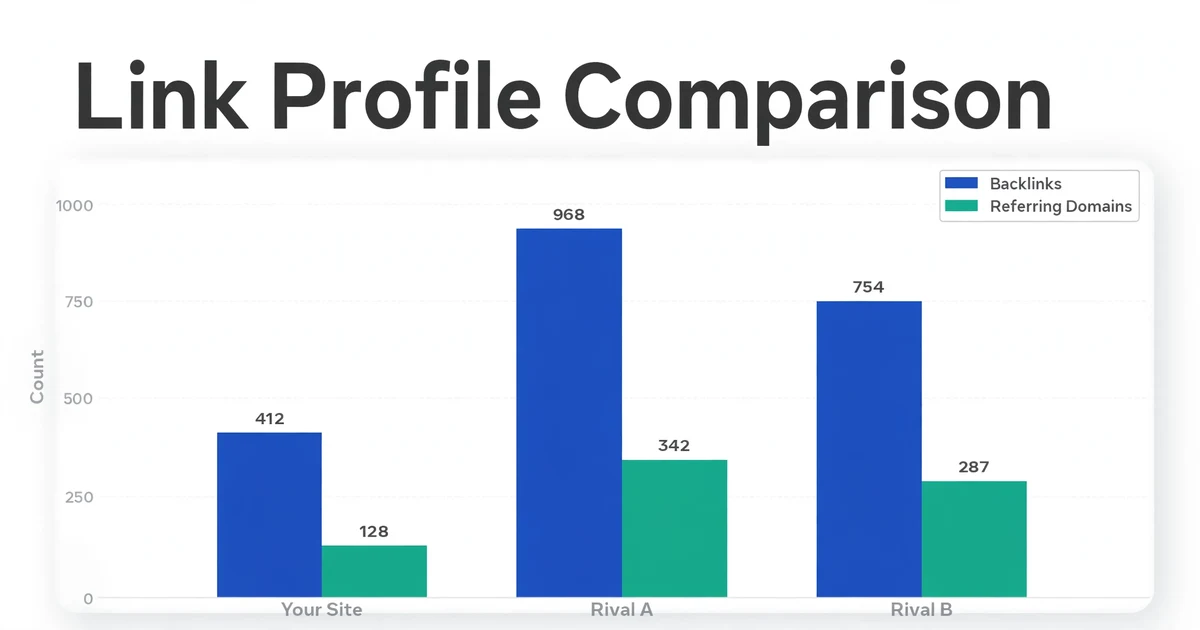
Example Results (Illustration Only)
Step 5: Check the Source Pages by Hand
Open the source pages for the most promising links. Check that the link is still live, on topic, and in the main content rather than in a footer or sidebar. A link that looks good in a spreadsheet can look weak in reality.
Step 6: Build a Short Prospect List
Keep only the prospects that pass your checks. For each one, note the source page, the rival it links to, and the page on your site that could earn a similar link.
How Link Gap Analysis Fits Into Competitor Backlink Analysis
Link gap analysis is the part of the work where you find the links your rivals have and you do not. It is one step inside competitor backlink analysis, and it works best after you have compared the profiles.
Find the Shared Gaps First
Start by listing the referring domains that link to at least two of your rivals but not to you. Those shared links often point to resource lists, directories, or guides that cover your topic. Next, check each one by hand. A shared link is only a gap if the source page is relevant, the link is live, and your site has a page that fits.
Sort the Gaps by Value
Then sort the gaps by value. A gap on a relevant page your audience trusts is worth more than a gap on a page that links to everyone. If your page is weaker than the rival page, improve it first, then seek the link.
Be careful with gaps that look easy. A site that links to every rival may add little value. A gap on an off-topic site may be easy to close but hard to justify.
How to Decide Which Prospects Are Worth Earning
Use a simple decision framework for every prospect. Score each factor as strong, mixed, or weak, and keep only the prospects that are strong on relevance and placement.
Put Relevance and Placement First
Relevance comes first: if the source page does not serve your audience, the link is unlikely to help. Placement comes next, because a link inside the main content is easier for a reader to notice. If the rival page is better than yours, improve your page before you ask anyone to link to it.
Anchor text also deserves a close look. A natural mix is normal, while identical anchors across many sites can look forced. Use the anchor text analysis guide to review anchor patterns before you act.
Do not disavow a link based on a third-party score alone. If links worry you, review them with the backlink audit checklist and check the source pages yourself first.
Turn Your Findings Into Action
A list of prospects is not a plan until you add owners and dates. Then group the work into three actions: improve a page, create a page, or contact a site.
Improve a page when a rival earns links to a better version of the same topic. Create a page when rivals earn links to a topic you do not cover at all. Contact a site only when your page is ready and the prospect has passed your checks.
Keep outreach simple and honest. Explain what your page offers and why it fits their readers. Do not pay for a link meant to pass ranking credit, because that breaks Google’s link spam policies. Any paid placement must be qualified with rel=”sponsored” or rel=”nofollow”.
After you act, track what happens. Use the how to monitor backlinks guide to watch for new, lost, and changed links, and record the outcome for each prospect.
Common Mistakes to Avoid
One common mistake is to study too many rivals at once. A long list leaves no time to check source pages by hand, so start small and expand later if you need to.
Another mistake is to chase totals. Look at the mix of links, the pages that earn them, and the topics they cover.
A third mistake is to skip the page check. A link in a spreadsheet may point to a page that has moved or closed, so always verify it on the live page before you act.
Finally, do not treat competitor research as a one-time task. Rivals publish new pages and earn new links, so repeat the analysis on a regular schedule.
Frequently Asked Questions
What is competitor backlink analysis?
Competitor backlink analysis is the study of the links that point to rival websites, so you can find prospects that fit your site.
How do I find competitor backlinks?
Use a third-party backlink tool to export links for a rival domain or page. Then remove duplicates, group links by referring domain, and check the source pages by hand.
Can Google Search Console track competitor backlinks?
No. Search Console reports link data only for a property you can access, so rival research needs a third-party index. The Google Search Console Links report is a useful baseline for your own site.
How many competitors should I analyse?
Start with three to five rivals that serve the same audience and compete for the same topics.
What makes a competitor link worth earning?
A link is worth earning when the source page is relevant, the link sits in the main content, and your page is a strong match. See the Ahrefs guide on what makes a high-quality backlink for more detail.
Conclusion
Competitor backlink analysis works when it stays simple. Pick a small set of real rivals, compare profiles, find the gaps, and check every prospect by hand.
Then improve your pages, contact only the sites that fit, and track what happens. Start with one rival and one target page, then repeat the process.