
AI seo services are the newest label in search marketing, and the hardest one to judge. Providers promise visibility inside AI answers, citations in chatbots and a place in Google AI Overviews. Some of that promise rests on real work. However, much of it rests on fresh vocabulary for old tasks.
This guide separates the two. First, it explains what providers claim to sell under the ai seo services label. Next, it shows the genuine work behind the label. Finally, it gives you five questions and a simple table for testing any offer. If you want the plain definition first, our ai seo services explainer covers the basics step by step.
One boundary matters throughout this guide. Nobody can guarantee that an AI assistant will mention your brand. Assistants choose their own sources, and their answers change over time. Therefore, honest providers sell measurement and steady improvement, never a promised mention.
This guide is written for US business owners and marketing leads. Most of you are not short of offers. Instead, you are short of a reliable way to compare them. Also, many offers arrive with polished decks and very little plain language. Therefore, the sections below favour plain tests over polished claims. First, you will see the claims. Next, you will see the work. Finally, you will get the questions that separate them.
What AI SEO Services Claim to Sell
The sales pitch usually starts with new labels. Providers talk about generative engine optimization, answer engine optimization and AI visibility scores. Each label sounds technical, and each one sounds urgent.
The claims then grow bolder. Some offers promise guaranteed mentions inside ChatGPT answers. Others promise top placement in AI Overviews within weeks. A few even claim secret prompt tricks that force assistants to cite your site.
The new labels add to the confusion. Generative engine optimization and answer engine optimization mostly describe the same underlying work. A new name does not create a new discipline. Therefore, judge every offer by its tasks and its evidence, never by its vocabulary.
The pitch sounds plausible for one real reason. Buyers genuinely ask AI tools for recommendations now. Assistants genuinely answer with named brands and cited pages. Therefore, visibility inside those answers has real value. The problem is never the goal. The problem is the guarantee attached to it.
Pricing talk follows the same pattern. Providers often hide behind custom quotes and discovery calls. However, a custom quote is not the problem by itself. The problem starts when nobody lists the tasks behind the price. Also, watch for retainers with no named deliverables at all. In short, if the tasks stay unnamed, the price stays unjustified.
Case studies follow the pattern too. Many decks show one dramatic before and after chart. However, the chart rarely names the site, the dates or the prompt set. Also, it rarely shows the months where nothing moved. Therefore, treat polished proof with the same suspicion as polished promises.
What the Real Work Behind AI SEO Services Looks Like
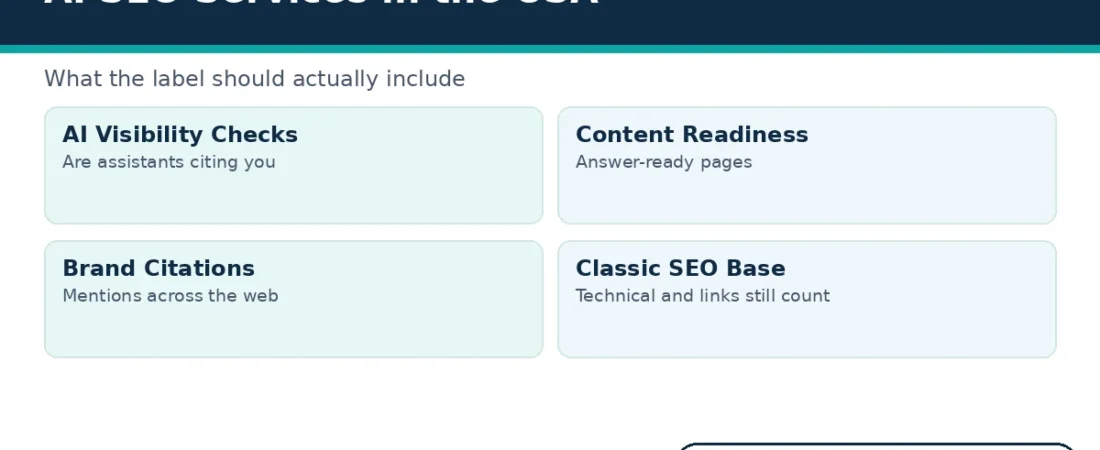
Strip away the labels, and ai seo services rest on four kinds of work. Each one is checkable, and each one existed before the label did. The AI layer adds new measurement on top of familiar foundations.
AI Visibility Checks and Citation Tracking
First, a provider tests how assistants answer real buyer questions. It fixes a set of prompts, such as best provider questions in your niche. Then it records which brands the assistants name and which pages they cite.
Next, it repeats the same tests on a schedule. The value sits in the log, not in one screenshot. A single answer proves nothing, because answers vary between runs. A dated series of answers shows whether your citations grow. The provider should also save the full answers, not just a summary score.
The prompt set itself needs care. First, the questions should match real buyer language in your market. For example, a prompt might ask for the best provider in a city, not a keyword string. Also, the set should cover comparison and shortlist questions, not only general ones. Then the results show how assistants treat you at buying moments. Finally, the set should stay fixed for months, so trends stay honest.
Answer-Ready Content Structure
Assistants extract answers from pages that state facts clearly. Therefore, real providers restructure key pages around direct answers. They place a plain answer near the top, then support it with detail below.
Clear headings, short sections and specific facts help extraction. Vague marketing copy does not. Short paragraphs and honest specifics beat clever slogans here. Our keyword optimization guide shows how to match each page to one clear search intent, and that discipline serves AI answers too.
Facts also need visible support. For example, a page should name its sources, dates and methods beside each claim. Then an assistant can quote the page with confidence. Also, consistent numbers across your pages build that confidence further. In contrast, pages that contradict each other give assistants a reason to cite someone else.
Brand Mentions and Citations Across the Web
Assistants also learn brands from the wider web. They draw on articles, listings, reviews and roundups that mention your business. Therefore, citation building means earning mentions on relevant third-party pages.
This work looks like digital PR and careful link building. A mention inside a relevant guide carries weight. A mention inside a random directory carries almost none. Reviews and listings matter too, because assistants quote them when buyers ask for local or product advice. Above all, relevance decides which citations help.
Guest articles and expert quotes feed this layer as well. For example, one useful guide on a respected niche site can support many answers. Also, original data gives other writers a reason to cite you. Therefore, citation building rewards businesses that publish things worth quoting.
The Classic SEO Base Still Counts
Finally, none of the AI layer works on a broken base. Assistants and search engines both rely on indexed pages. A site that blocks crawlers or buries its facts stays invisible in both systems.
Technical health, useful content and quality links remain the foundation. In practice, most early wins come from this base. A fixed indexing problem or a clearer service page can change citations faster than any new label. You can see how the pieces fit together across our services.
How AI Answers Actually Find Their Sources
AI assistants do not keep a secret list of approved brands. Instead, they build answers from content they can reach. Some systems search the live web at answer time. Others rely on training data plus fresh retrieval.
Either way, the inputs look familiar. Indexed pages, business listings, reviews and cited articles feed the answer. Consistent facts across those sources raise your chances of a mention. Contradictory or missing facts lower them. Consistency matters as much as coverage, so your name, facts and offers should match across your site and your listings.
Google explains the classic side of this system in its SEO starter guide. Pages must be crawlable, clearly written and genuinely helpful. AI answers add a new reader, but they read the same web. Therefore, the honest goal is coverage and clarity, not control.
Answers also differ between tools. First, one assistant may cite your guide for a question. Meanwhile, another may cite a rival for the same question. Also, the same tool can change its answer after a source updates. Therefore, single checks prove very little. Only repeated testing across tools shows your real position. In short, treat every snapshot as weather, and every trend line as climate.
Local and product questions add one more input. Assistants lean on listings, reviews and ratings when buyers ask nearby questions. Therefore, a tidy listing profile supports both map results and AI answers. Also, review text often gets quoted directly, so honest recent reviews carry unusual weight.
Five Questions to Ask Any AI SEO Services Provider
These five questions cut through most hype in one call. Ask them in order, and write the answers down. A serious provider answers each one calmly and specifically.

1. What Exactly Will You Measure?
Ask for the prompt set, the tools and the baseline date. The provider should test fixed questions on named assistants and AI Overviews. Vague answers here predict vague reporting later.
2. What Work Changes on My Site?
Ask for deliverables you can open and check. Real ai seo services name pages, sections and citation targets. If the work cannot be listed, it probably cannot be verified either.
3. How Much of the Plan Is Classic SEO?
A healthy plan keeps technical fixes, content and links inside it. If the plan drops every basic, the AI label is doing the selling. Basics first remains the right order.
4. What Do You Promise in Writing?
Listen for guarantees about mentions or placements. Nobody controls which sources an assistant cites. Therefore, a written guarantee is a warning sign, not a comfort.
5. How Will You Report Progress?
Ask to see the report format before you sign. It should show logged prompt tests and citation counts over time. One polished screenshot tells you nothing about trend.
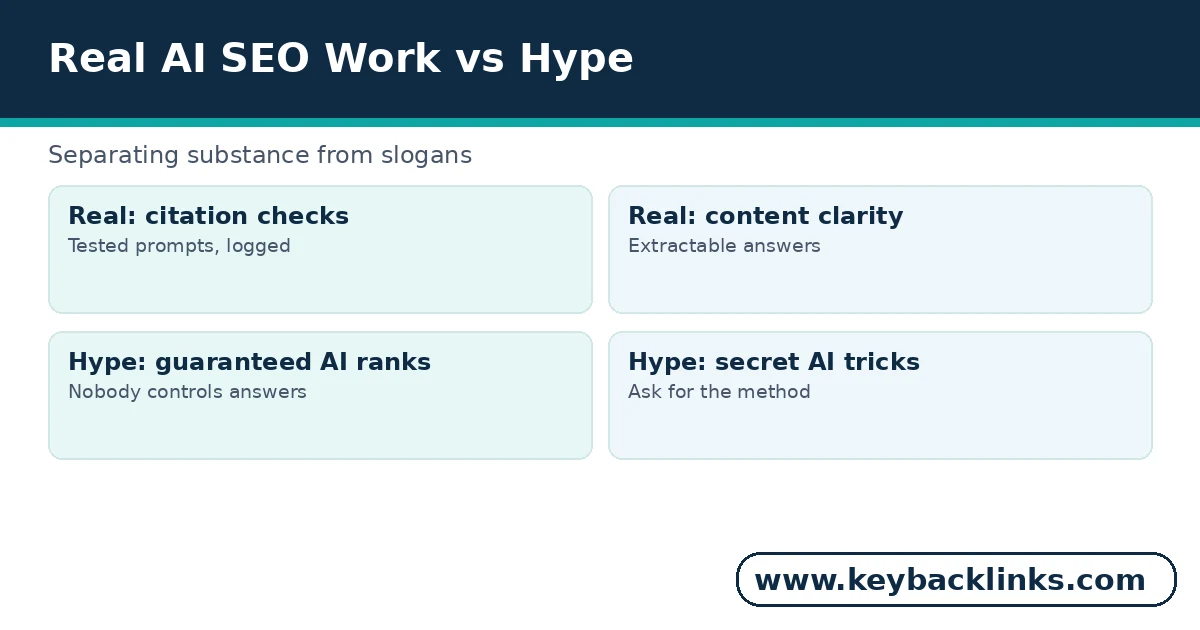
Real Work vs Hype: Read Any Offer With This Table
Most offers mix real work with inflated language. The table below separates the two, claim by claim. Use it while you compare any ai seo services proposal.
What Good Reporting From AI SEO Services Looks Like
Reporting turns AI visibility from a claim into a record. First, the baseline matters. Your first report should list the prompts tested, the tools used and the date of each run.
Next, each monthly report should show movement. It should list citations gained, citations lost and the exact pages assistants cited. It should also name the work completed that month and the next steps planned.
Example: a good report line reads, “Prompt set of 20 buyer questions, tested 3 March: your brand cited in 6 answers, up from 4 in February; two new citations came from the pricing guide.” A weak line reads only, “AI visibility improved this month.”
Ask who owns the prompt set as well. If the provider changes the questions each month, the trend line means nothing. Stable questions make honest comparison possible.
Citation counts deserve a careful reading too. First, separate brand mentions from linked citations, because they signal different things. Next, note which pages earn the citations, not only how many exist. Then connect the gains to the work done that month. Also, a lost citation is information, not failure, because sources change owners and content. Finally, the report should say what happens next, in plain tasks.
Above all, judge the trend, not a single month. AI answers shift as sources update, so counts will wobble. A rising line across a quarter means far more than one good week.
How a US Business Should Phase In AI SEO Services
Most US businesses should adopt ai seo services in phases, not in one leap. The order below protects your budget and your basics.
Phase one fixes the base. Audit the site, repair crawl and indexing problems, and strengthen your money pages. Until assistants can reach and read your pages, AI work has nothing to amplify.
Phase two restructures priority content. Turn your strongest guides and service pages into answer-ready pages. Add direct answers, clear headings and checkable facts.
Phase three builds citations. Earn mentions and links on relevant third-party sites, and tidy your listings and reviews. This phase feeds assistants the outside evidence they cite.
Finally, phase four measures and adjusts. Run the prompt set monthly, watch citation counts, and improve the pages assistants almost cite. Small steady gains beat one dramatic relaunch.
Timelines stay honest throughout. For example, the base fixes in phase one can land within weeks. However, citation growth in phase three usually takes months of steady outreach. Also, measurement needs a baseline before any change, or progress stays a guess. Therefore, judge each phase on its own clock.
Small businesses can compress the phases, but they should not skip them. For example, a small site may finish phase one in a fortnight. Still, the order protects the result. Skipping the base simply moves the cost into later rework.
How KeyBacklinks Supports the Citation and Link Side
KeyBacklinks works on the side of this system we know best. We build the links and mentions that assistants and search engines both draw on. Our campaigns cover guest posting, niche edits and editorial link building on relevant sites. That is the part of ai seo services where links do the talking.
We also keep the honesty rule from this guide. We never sell guaranteed AI mentions, because nobody can deliver them. Instead, we deliver placements you can open, check and keep, reported with live URLs and dates.
Our reporting follows the standard in this guide. Each placement arrives with its live URL, its anchor text and its date. Also, we separate new links from lost ones, so the record stays honest. Then you can match our report against your own citation checks at any time.
If you want that citation and link work planned for your site, request a free quote and tell us your goals. We will map the pages and mentions worth building first.
Common Mistakes Buyers Make With AI SEO Services
Most bad outcomes start with buying mistakes, not bad luck. The three mistakes below appear again and again in early offers.
Buying the Label Before the Basics
Some businesses buy AI packages while their sites stay broken. However, assistants cannot cite pages they cannot read. Therefore, fix crawling, indexing and key pages first. The fashionable layer only amplifies a base that already works.
Judging by One Screenshot
A single glowing answer feels like proof. In reality, the same question can produce a different answer tomorrow. Also, sellers choose their best screenshot, never an average one. Therefore, ask for the full log behind any image.
Chasing Every New Tool and Label
New AI labels appear almost monthly. Chasing each one scatters your budget and your content plan. Instead, keep one stable measurement routine and one clear content standard. Then new tools can join the routine without replacing it.
Frequently Asked Questions
What are ai seo services, in plain terms?
They are services that help your brand appear inside AI generated answers. The work combines visibility testing, answer-ready content, brand citations and classic SEO. In short, providers improve your odds of being cited, and then they measure the change. Good providers also explain each task in plain language before you pay.
Can a provider guarantee that AI assistants mention my brand?
No. Assistants choose sources on their own systems, and answers change between runs. Any provider who guarantees a mention is promising something outside its control. Judge providers on method and reporting instead. Also, ask how the provider handles a flat month, because honest answers there reveal real professionalism.
Do ai seo services replace traditional SEO?
No, they sit on top of it. Assistants read the same indexed web that search engines crawl. Technical health, helpful content and quality links therefore stay essential. The AI layer adds measurement, not a shortcut.
How long does AI visibility work take to show progress?
Expect a trend across months, not days. Baselines, content changes and new citations all need time to register. Monthly prompt tests show whether the line moves in the right direction. Therefore, review progress quarterly, and keep funding the work that the log supports.
Conclusion
AI seo services can help your brand earn a place inside AI answers. However, the value sits in real work: visibility testing, answer-ready content, honest citations and a sound classic base. Hype sits in guarantees that nobody can keep.
Use the five questions and the table before you sign anything. Then phase the work in, measure it monthly, and keep every claim checkable. That approach turns a fashionable label into a durable advantage.