
Providers now sell ai seo services as the answer to a real change in search. Buyers ask AI tools direct questions, and those tools reply with named brands and sources. So businesses want to appear inside those answers, not only in the blue links below them.
However, the label hides very different kinds of work. Some of it is solid SEO with a new measurement layer on top. Some of it is ordinary work in a shiny new wrapper. This guide explains what the term really means, what is real, and how to test whether you need it at all.
What AI SEO Services Actually Mean
The term ai seo services works as an umbrella label, not one fixed product. It covers work that raises your chance of being found, read and cited by AI systems. Those systems build their answers from web content they can reach and trust.
The surface area is wider than it used to be. Google AI Overviews sit above normal results, and tools like ChatGPT and Perplexity answer questions directly. Each surface draws on web sources in its own way. Therefore, the work focuses on visibility, clarity and reputation at the same time.
You may also hear the phrase generative engine optimization, or GEO, for the same idea. The names differ, but the underlying tasks overlap heavily. In short, providers repackage familiar SEO tasks around one new question: will an AI tool mention us?
One more distinction helps. Normal SEO aims at a ranked position on a results page. This newer work aims at a mention inside an answer itself. A page can rank fifth and still get cited, or rank first and get skipped. Therefore, the two channels overlap, but they do not move in lockstep. That gap is exactly why providers created a separate label for the work. It also explains why honest reporting tracks both channels side by side, instead of blending them into one vague score.
The Four Workstreams Behind the Label
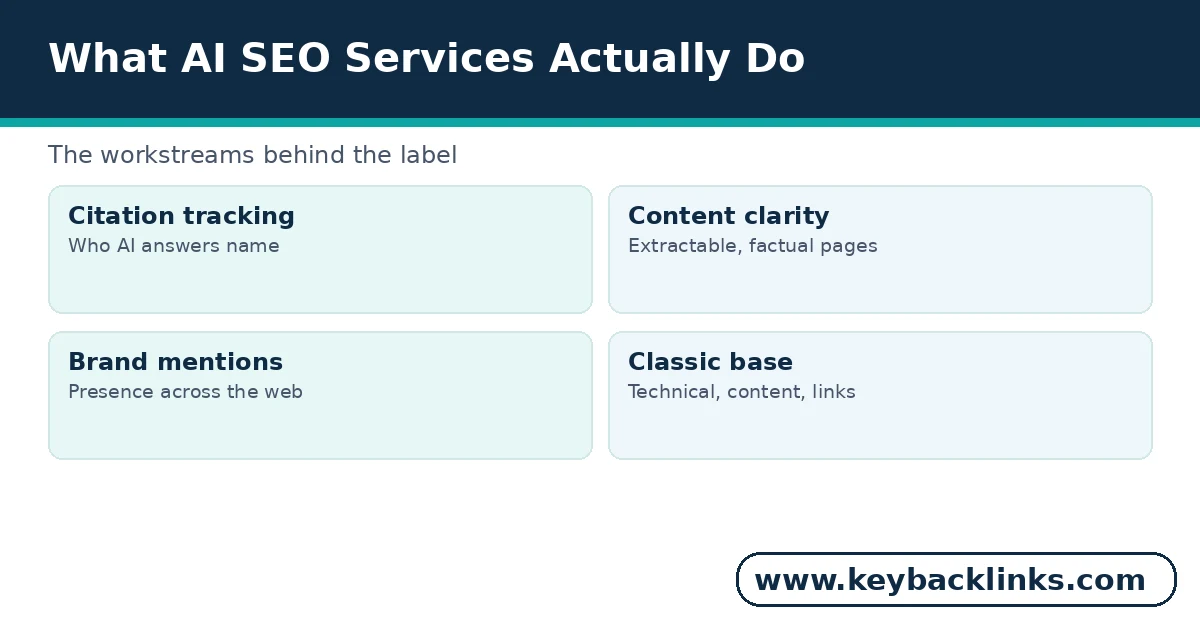
Strip the label away, and most ai seo services rest on four workstreams. Each one existed before AI search became popular. However, each one now gets measured against AI answers as well as normal rankings.
Visibility Checks
First, the team tests how AI tools answer buying questions in your market. It records which brands get named, which pages get cited and where your site appears. Then it repeats those checks over time, because the answers shift as the tools update.
Honest method matters here. Answers vary by tool, by account and even by day. Therefore, a good check uses fixed questions, dated notes and several tools, never one lucky screenshot.
A useful check starts with a fixed question list. The team writes down the exact buying questions your customers ask, word for word. Then it runs those same questions each month and saves the answers. Over time, the log shows whether your mentions grow, stall or slip. Without that fixed list, every report can cherry-pick the questions that flatter the work.
Answer-Ready Content
Next, your pages need to answer questions in a form AI tools can lift cleanly. Clear headings, direct answers and well-structured facts help a great deal. Our guide to keyword optimization shows how to match pages to real search intent, and the same discipline applies here.
This work is not magic. It is careful writing, honest structure and regular updates. Pages that explain one topic well give AI systems something safe and accurate to quote.
Brand Citations and Mentions
Also, AI tools lean on what the wider web says about your brand. Mentions on trusted sites, accurate listings, honest reviews and useful articles all shape that picture. Strong citations tell the tools that your brand is real, active and worth naming.
Links still matter inside this workstream. A link from a respected site is both a ranking signal and a public record of trust. That is why link building sits close to the centre of most ai seo services packages.
The Classic SEO Base
Finally, none of this replaces classic SEO. Crawling, indexing, site speed and internal links still decide whether your pages get found at all. Google’s own SEO starter guide sets out those basics clearly, and they apply to AI search too.
If the base is broken, AI work builds on sand. Fix the foundations first, then add the newer visibility checks on top.
Real Work vs Hype in AI SEO Services
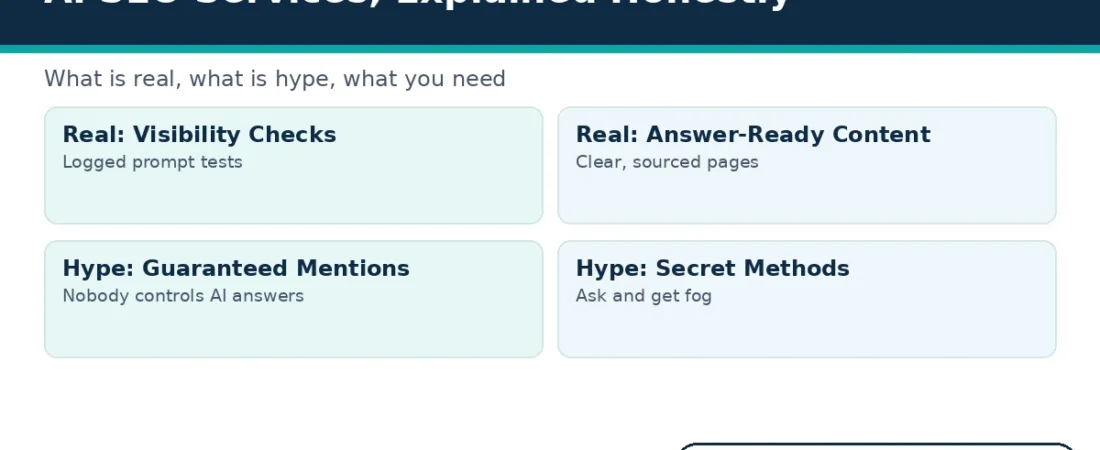
Some offers describe real work in plain terms. Others dress up weak work with bold promises and new jargon. The table below separates the two, so you can judge any pitch in minutes.
Price talk reveals the same split. Real work comes with a clear list of tasks, hours and reporting dates. Hype hides behind package names and refuses to name a single deliverable. So ask every provider one simple question: what exactly will your team do in the first month? A straight answer lists checks, pages and outreach targets. A vague answer talks about secret methods and proprietary systems. That one answer often tells you which side of the table you are looking at.
Above all, watch the promises. Nobody controls what an AI tool says tomorrow. A provider who guarantees a mention is selling certainty that simply does not exist.
How AI Answers Choose Their Sources
AI tools do not invent their answers from nothing. They draw on indexed pages, business listings, reviews and citations spread across the web. Then they assemble an answer from the sources they can reach and trust.
That process has honest limits. The same question can produce different answers on different days. Also, one tool may cite your guide while another names a rival instead. Therefore, progress looks like a rising pattern of mentions, not one fixed position you can hold.
Consistency helps your chances. A brand that says the same clear thing on its site, its listings and its coverage is easier to describe. Conflicting names, dates and claims give the tools a reason to skip you.
Reviews and listings carry real weight in this mix. AI tools often describe local and service brands using review text and directory data. Outdated listings or thin review profiles can therefore drag down an otherwise strong site. Keeping those records accurate is unglamorous work. However, it gives the tools clean, consistent facts to repeat, and it helps your customers at the same time.
In short, you cannot buy a guaranteed slot inside an answer. You can only raise your odds with clear content, a sound site and a trusted brand footprint.
A Four-Question Self-Test Before You Buy
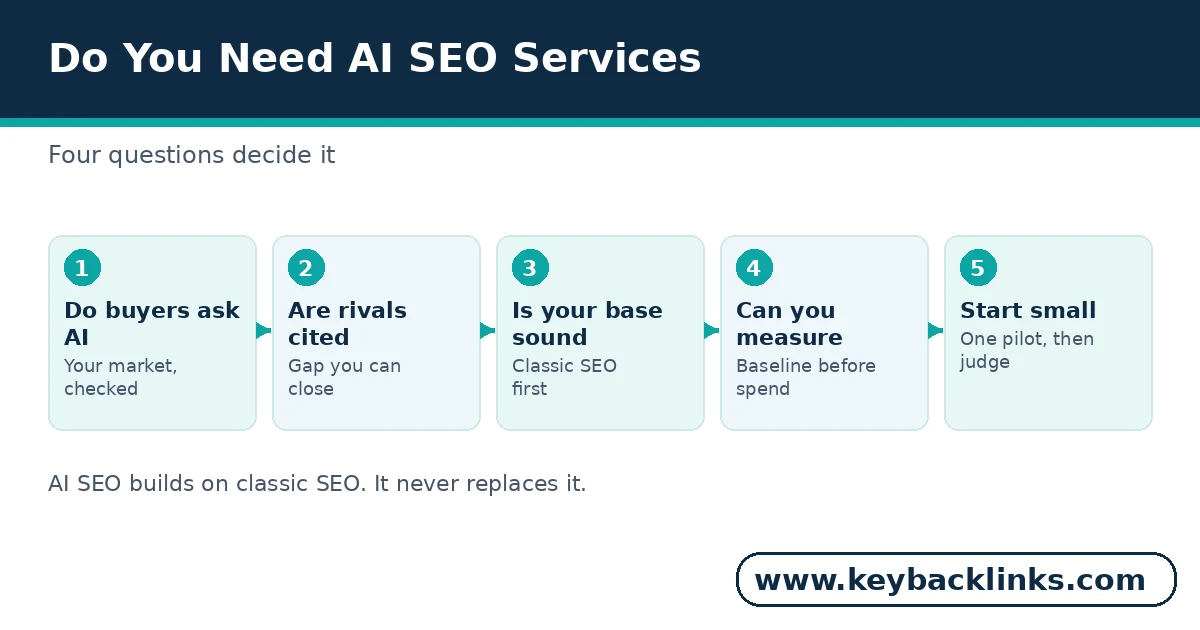
Before you pay for ai seo services, run this short self-test. Answer honestly, because each answer points to a different next step.
Do Your Buyers Ask AI Tools?
First, check whether your customers actually use AI tools for buying questions. Ask your sales team what prospects mention on calls. If buyers already ask tools for recommendations, visibility checks deserve a real place in your plan.
Are Rivals Already Cited?
Next, run a few buying questions through the main AI tools yourself. Note which brands appear and which pages get cited as sources. If rivals show up and you never do, the gap is real, and it is worth closing.
Is Your Classic Base Sound?
Then check the foundations honestly. If your site has crawl errors, thin pages or weak links, fix those first. AI-focused work cannot rescue a site that search engines already struggle to read.
Can You Measure the Work?
Finally, ask how success will be tracked before any money moves. You need dated checks, fixed questions and clear reports, not vague claims about buzz. If a provider cannot explain its measurement, its ai seo services are mostly a label.
If you answered yes twice or more, ai seo services may deserve a careful trial budget. If the classic base is weak, spend there first, then revisit this question later.
Where KeyBacklinks Fits In
KeyBacklinks does not sell ai seo services as a separate miracle product. Our work covers the links and citations side of the picture. We earn links and mentions on relevant, trusted sites through guest posting, niche edits and editorial outreach.
That work supports AI visibility in a plain, checkable way. Each quality link adds another public record that your brand is real and worth citing. You can see the full range on our services page, and our deeper buying guide to ai seo services in the USA explains how to judge providers step by step.
One limit deserves plain words. Links and citations raise your odds of a mention, but they never guarantee one. Any provider who suggests otherwise is guessing. We would rather show you the work, the live placements and the dated checks, and let the pattern speak for itself.
If you want that foundation built properly, request a quote and tell us about your site and your goals. We will explain what we would do, what it cannot do and how we would report it.
Frequently Asked Questions
What are ai seo services in plain terms?
They are services that help your brand appear inside AI answers. The work mixes visibility checks, clearer content, brand citations and classic SEO. The label is new, but most of the tasks are familiar, practical and measurable.
Can any provider guarantee an AI mention?
No. AI tools change their answers often, and nobody controls their output. Honest providers promise careful work and clear measurement instead. Treat any written guarantee of a mention as a warning sign.
Do ai seo services replace normal SEO?
No, they build on it. Search engines still crawl, index and rank your pages, and AI tools draw on that same web. A weak technical base limits every newer tactic, so the foundations always come first.
How do I measure progress?
Use fixed questions, dated checks and several AI tools. Track how often your brand appears, which pages get cited and how rivals compare. Also keep watching normal rankings and enquiries, because AI visibility is only one channel.
Conclusion
AI seo services describe real work when the label covers visibility checks, answer-ready content, citations and a sound classic base. The same label becomes hype when it promises guaranteed mentions or instant results instead.
Run the self-test before you spend anything. Fix the classic base first, then add AI visibility checks where your buyers actually use these tools. Above all, choose providers who explain their methods in plain language and report honestly.