
LinkedIn is where decision-makers research suppliers, compare options and shortlist vendors. Strong LinkedIn advertising strategies turn that research habit into a steady flow of leads. Thus, they place a useful offer in front of the right professionals at the right moment.
However, a click by itself is not a lead. Indeed, most LinkedIn campaigns fail between the click and the enquiry. The ad promises one thing, yet the page behind it delivers something vague. This guide fixes that gap. It walks through six practical plays, then shows how the content behind your ads does the real converting.
Why LinkedIn Fits B2B Lead Generation
First, LinkedIn targeting starts with the job, not the keyword. You can aim ads at a job title, a seniority level, an industry or a company size. Therefore, your offer reaches the person who actually signs off the purchase.
The mindset matters just as much. People open LinkedIn to read industry news, follow suppliers and grow their careers. In contrast, entertainment fills most other social feeds. An ad about a real business problem lands differently in a work setting.
The platform also rewards specificity. A message written for finance directors lands harder than a general business post. Moreover, few channels let you aim that precisely at senior buyers. That precision shapes every play in this guide.
That fit has honest limits, though. LinkedIn rarely suits cheap consumer products, where one sale cannot carry the click cost. LinkedIn advertising strategies reward deal value and patience instead. First, check that a single good lead is worth real money to your business.
Six LinkedIn Advertising Strategies That Turn Clicks Into Leads
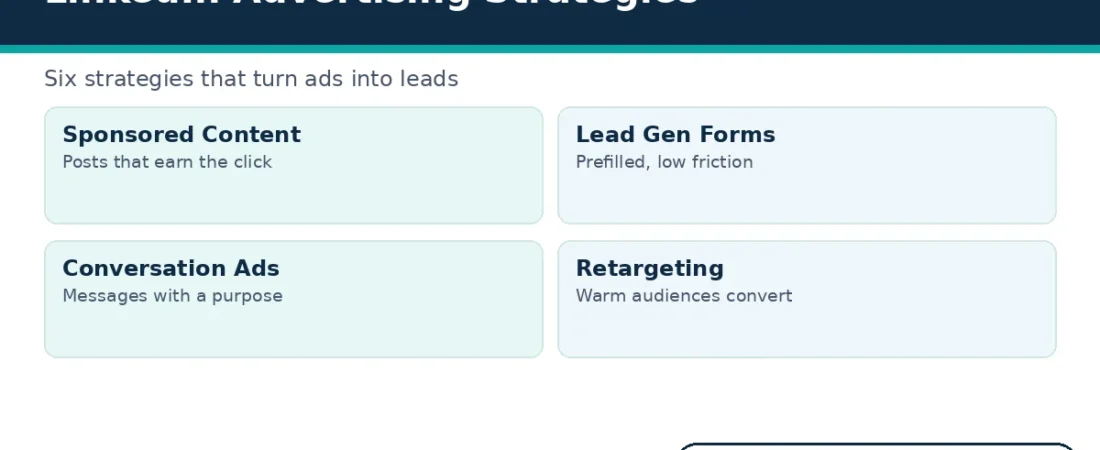
The six LinkedIn advertising strategies below share one simple rule. Each one gives the reader something useful before asking for anything. First, here is the full set at a glance.
Strategy 1: Sponsored Content Built on a Strong Lead Magnet
First, sponsored content places your post inside the feed of your chosen audience. A plain sales post earns polite scrolling and little else. Instead, promote a lead magnet: a guide, a checklist, a template or a short report.
Above all, the magnet must solve one narrow problem for one narrow reader. For example, a cash-flow checklist for operations managers beats a general ebook on business growth. After the click, the reader trades an email address for that specific help.
Next, choose the magnet topic from real sales conversations. Ask your team which question prospects raise most in first calls. Then build the asset around that exact question. A magnet that answers a live objection feels relevant at once. It also gives the sales team a reason to follow up.
Then the follow-up matters as much as the ad itself. Send the promised asset at once, without a sales pitch attached. Next, share one or two related articles across the following days. Each touch proves expertise instead of chasing a fast sale.
Strategy 2: Lead Gen Forms That Remove the Friction
Lead gen forms attach directly to the ad inside LinkedIn. LinkedIn prefills most fields from the member profile, so the reader confirms instead of typing. Consequently, on a phone, that saved effort decides whether a lead arrives at all.
However, easy forms also attract casual curiosity. Therefore, add one qualifying question where the format allows it. A question about company size or current tools separates intent from idle clicks.
Finally, connect the form to your inbox or CRM at once. A lead that waits two days for a reply has already cooled. Follow-up speed is part of the strategy, not an admin detail.
Strategy 3: Conversation Ads That Start a Dialogue
Conversation ads arrive in the LinkedIn inbox as a message from a named person. As a result, that placement changes the tone completely. The reader feels addressed, not advertised at, so the copy must sound human.
Keep the message short, and give the reader clear reply choices. Offer the guide, offer a short call, or offer a polite no-thanks path. Each button keeps the exchange moving without pressure.
Send the message from a real, recognizable person. A founder, a consultant or a team lead earns more replies than a logo. Therefore, readers answer people, and they ignore brand broadcasts. Pick the sender before you write a single line.
Also, send this format to a narrow, warm list only. A personal message blasted at thousands of strangers reads as spam. The same message to recent visitors or known accounts reads as follow-up.
Strategy 4: Retargeting People Who Already Visited You
Retargeting shows your ads to people who visited your site but left quietly. These readers already know your name, so they need a nudge, not an introduction. Retargeting is often where LinkedIn advertising strategies earn their warmest responses.
The Insight Tag makes this audience possible. You add the tag to your website, then build audiences from key pages. Pricing page visitors deserve a different message from casual blog readers.
So match the ad to the visit itself. Pricing visitors can see a comparison guide or a consultation offer. Blog readers can see the lead magnet from the first strategy. In short, the second message should continue the first conversation.
Strategy 5: Account-Based Targeting for Named Companies
Account-based targeting flips the usual order of advertising. You start with a list of companies you want as clients. LinkedIn then matches that list and shows ads only to people at those firms.
This focus suits B2B firms with a defined market. A consultancy serving mid-size law firms gains nothing from random reach. Instead, every impression lands inside an account the sales team already values.
Keep the account list current as well. Companies merge, shrink and change direction every year. A stale list wastes impressions on firms that no longer fit. Accordingly, review the list each quarter with the sales team.
Pair the ads with direct outreach for the strongest effect. A prospect who sees your guide in the feed and your note in the inbox remembers your name. Familiarity alone closes nothing, but it opens many doors.
Strategy 6: Organic Content Paired With Paid Promotion
Your organic posts already reveal what your audience values. A post that earns comments and shares has proven its message. Paid promotion then gives that proven post a second, wider audience.
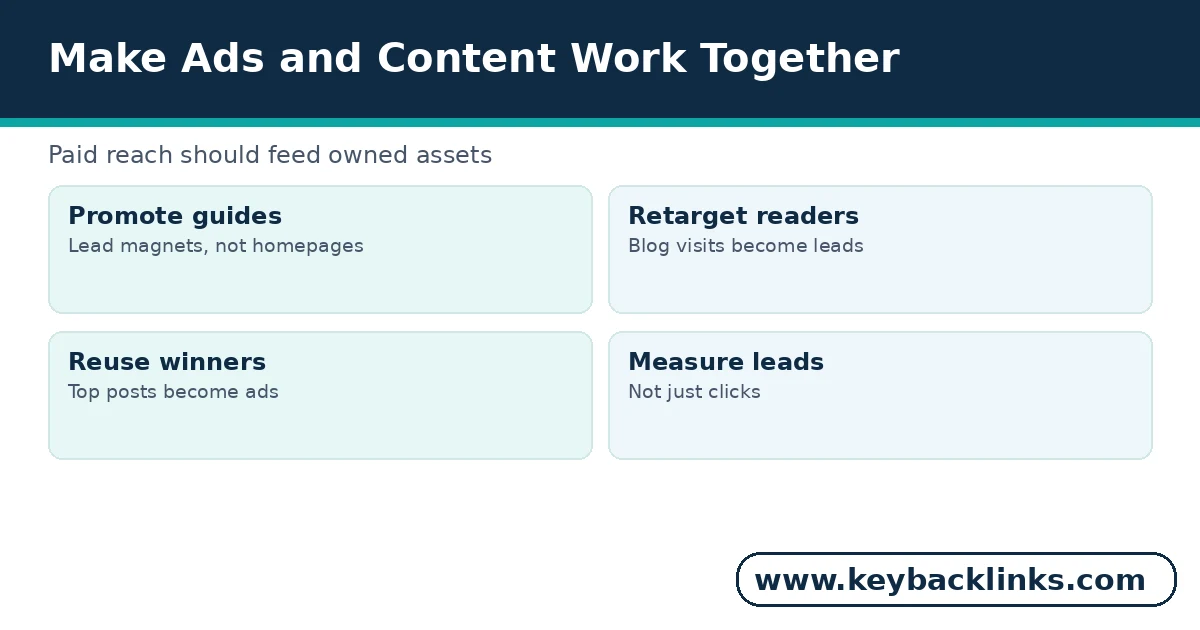
Build the habit in both directions. Publish something useful every week, then watch which pieces travel furthest. Next, promote the winners to a cold audience that matches your buyers.
Consequently, this pairing improves the ads themselves, too. A promoted post carries its real comments with it. Readers trust content their peers already engaged with, and that trust lifts the click.
From Click to Lead: The Journey Behind the Ad
Every play above follows the same three-step path. The ad earns attention, the offer earns the click, and the page earns the lead. When LinkedIn advertising strategies fail, the break usually sits in that middle step.
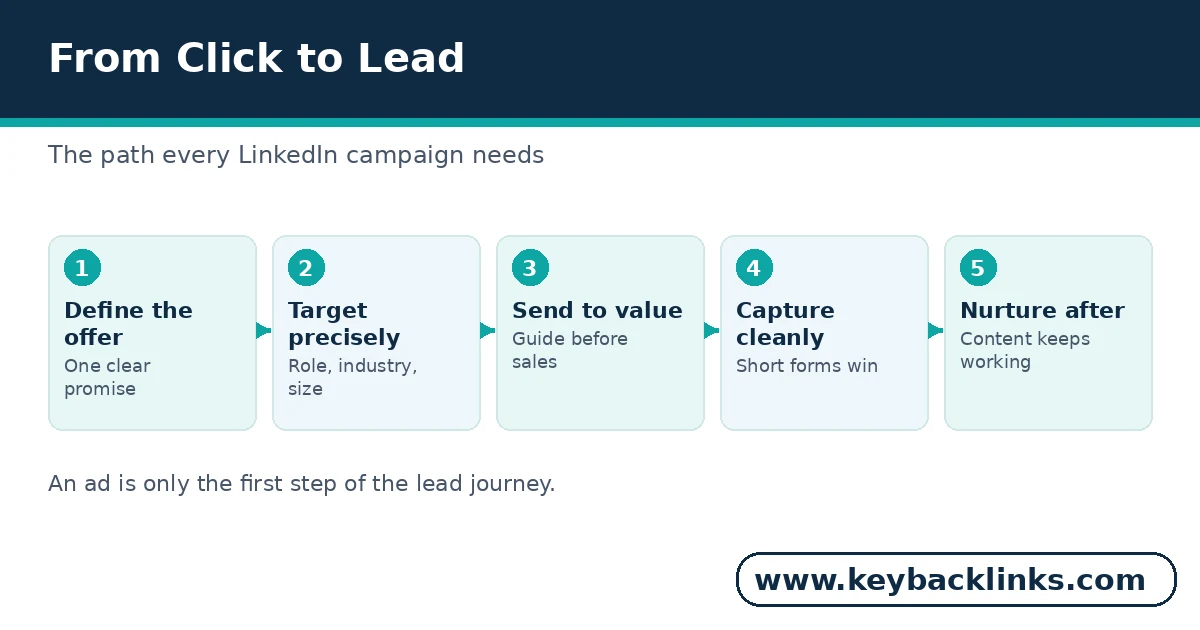
Example: a software firm promotes a migration checklist to operations heads. It then retargets the downloaders with a consultation offer, so the second ad continues the first conversation.
Therefore, test the whole chain before you raise any budget. Read the ad, click it yourself, and finish the form on your phone. Any friction you feel, your buyers feel twice as strongly.
Each step also has its own measure. First, track the click rate to judge the ad and the offer. Then, track the form completion rate to judge the page. When one rate dips, you know exactly where to repair.
How Content Turns Ad Clicks Into Leads
An ad can only promise value, while the content must deliver it. A focused guide or a practical checklist proves your expertise within minutes. Consequently, weak content wastes the click, however clever the targeting was.
Readers rarely stop at one page, either. After the download, they scan your blog and your service pages. Consistent, useful articles hold their attention and move them toward an enquiry. Our blog post writing and SEO article writing services exist for exactly that job. They build the assets your campaigns stand on.
Refresh those assets as your market learns. Update the guide when questions change, and add fresh examples each quarter. Meanwhile, old assets quietly lose their pulling power. A short refresh protects the spend behind them.
How to Budget for LinkedIn Ads Honestly
LinkedIn clicks usually cost more than clicks on consumer platforms. You pay for access to senior professionals in a work setting. Therefore, judge the spend against the value of one closed deal, not against cheap traffic.
Give each test a fair window before you judge it. Change one variable at a time, such as the audience or the offer. Consequently, changing everything at once teaches you nothing. Discipline turns a modest budget into clear answers.
Start smaller than your ambition suggests. Fund one audience, one offer and one clear conversion path first. LinkedIn publishes its own advertising guidance for businesses. It rewards the same discipline these LinkedIn advertising strategies rely on: test, measure, then scale.
Then scale only what produced qualified leads. Move budget toward the winning audience in stages, not in one jump. Above all, never judge the first week alone, because B2B buyers research slowly.
How to Judge Lead Quality, Not Just Volume
A cheap lead that never buys is the most expensive lead of all. Therefore, score every lead against the buyer you actually want. Job title, company size and industry matter more than the raw count.
Subsequently, track each campaign through to real sales conversations. Ask your sales team which leads they welcomed and which they ignored. That honest feedback beats any single dashboard metric.
Build a simple scoring habit around those signals. Mark each lead as a strong fit, a partial fit or a poor fit. Then compare those marks against the campaign that produced them. Patterns appear within a month or two.
Also, review quality monthly rather than daily. Small B2B campaigns produce small numbers, and daily swings mislead everyone. A monthly view shows which LinkedIn advertising strategies bring buyers and which bring browsers.
Mistakes That Weaken LinkedIn Advertising Strategies
The first mistake is aiming a hard sales offer at a cold audience. Consequently, strangers rarely book calls with a brand they met seconds ago. Lead with help first, then make the ask.
The second mistake is stacking too many targeting filters. Each extra filter shrinks the audience until the ads barely deliver. Start with the few filters that define your buyer, then loosen them if delivery stalls.
Finally, many teams polish the ad and neglect the destination. The landing page loads slowly, asks for ten fields and buries the promise. Fix the destination first, because the ad can only do so much.
How KeyBacklinks Supports the Content Behind Your Ads
KeyBacklinks builds the assets that make LinkedIn campaigns convert. Our services cover the guides, articles and authority work that sit behind your offers. Strong content also earns links and search visibility, so one asset serves three channels at once.
If your LinkedIn advertising strategies need stronger material behind them, start with the offer itself. Request a content plan and quote, and tell us which buyers you want to reach. We will shape the guides and articles your campaigns deserve.
Frequently Asked Questions
Are LinkedIn ads worth it for a small B2B company?
They can be, when one closed deal covers many clicks. Instead, small firms should start with one narrow audience and one strong offer. If a single lead holds little value, LinkedIn is the wrong channel.
Should I promote a service page or a lead magnet first?
Promote the lead magnet to cold audiences, because strangers want help before sales pages. Save the service page offer for retargeting, where readers already know your name. That order respects how buyers actually decide.
How long does LinkedIn advertising take to produce leads?
Meanwhile, warm audiences can respond within days of a launch. Cold campaigns need a testing cycle first, while you refine the audience and the offer. Judge the channel over a full quarter, not a single week.
Do I need a large content library before I start?
No, you need depth, not volume. Most LinkedIn advertising strategies run well on one strong guide and two or three supporting articles. Subsequently, you can build the library around the topics your leads respond to.
Conclusion
The six plays in this guide share one foundation: a useful offer, precise targeting and content that proves expertise. Get those three right, and LinkedIn becomes a dependable lead channel instead of an expensive experiment.
So start with one strategy, one audience and one strong asset. Measure lead quality honestly, then scale what works. Above all, keep the content behind your ads as strong as the targeting in front of them.