

Do backlinks still matter in 2026? The short answer is yes. However, the useful answer is longer. A backlink is a link from one page to another. Search engines still use links to find new pages. They also use links to understand what a page covers. In addition, links help search engines judge whether other sites trust a page.
What has changed is how much weight one link carries. Ten years ago, a site could rise on raw link counts alone. That no longer works. Now a link must pass three tests before it helps. First, it must be relevant. Next, it must sit in sensible context. Finally, it must come from a page a reader can trust. A link that fails all three does not help. In contrast, one good link can do more than dozens of links that nobody sees.
What "Matter" Means in Practice
The word matter hides three different jobs. First, links help search engines find pages. A crawler follows links from pages it already knows. As a result, a new page with no links can stay undiscovered for longer. Second, links help search engines understand a page. The words around a link give clues about the topic. In addition, the topic of the linking page adds more clues. Third, links act as a rough signal of trust. When an independent site links to a page, it suggests the page was worth pointing readers to.
So do backlinks still matter in the same way they did ten years ago? No. Counts matter less now, and the quality of each link matters more. For example, one link from a relevant guide that readers actually use can beat dozens of links that nobody sees. That shift is the whole story of this guide. Links still matter, but only the links that pass the tests below.
The Three Tests a Link Has to Pass
Judge every link by three tests. A link that passes all three is worth keeping and watching. A link that fails all three is worth ignoring. In addition, a link that passes one test but fails the other two needs a closer look before you act on it.
1. Relevance
Relevance asks whether the linking page covers a topic close to yours. For example, a link to a guide on link building fits well on a page about SEO reporting. However, it fits poorly on a page about holiday recipes. Check relevance at the page level, not only at the site level. A large site can host many topics, and one page can be off topic while the rest stays relevant. Therefore, read the source page and check its title and the paragraph around the link. Then ask whether its readers would find your page useful.
2. Context
Context asks where the link sits and what surrounds it. A link in the main body of an article is easy for a reader to use. In addition, a sentence that explains the topic makes the link clear. A link buried in a footer or a sidebar is harder to notice and harder to trust. Context also includes the words around the link. If the sentence explains why the reader should click, the link has a clear purpose. If the link appears with no explanation, its purpose is unclear.
3. Trust
Trust asks whether the linking page is one a reader would rely on. A page with real authorship, a clear topic, and content that other sites also link to is easier to trust. In contrast, a page made only to host links is harder to trust. It often has thin text and no real audience. You cannot measure trust with one number. Third-party authority scores can help you sort a long list. However, they are vendor estimates, not a Google judgment. So open the page and judge it yourself. For a deeper look at these checks, see our guide on backlink quality metrics.
If a link passes all three tests, do backlinks still matter? Yes. That is exactly where they matter most. A relevant, well-placed link from a trusted page helps a page get found, understood, and trusted at the same time.
Example chart: three example links scored for relevance, context, and trust. Example data only, not real results.
What a Link Can and Cannot Do
The table below keeps expectations honest. It shows what a good link can do, what no link can do on its own, and how to check each point.
Do Backlinks Still Matter for a New Site?
For a new site, do backlinks still matter mainly as a way to be found? Yes. That is their clearest job. A new site has no history for search engines to work with. As a result, links from pages that are already known help crawlers reach it. In addition, a handful of relevant links can be enough to get key pages discovered and understood.
What a new site should not do is buy a large batch of links to look established. A sudden pile of irrelevant links does not build trust. In addition, it can draw the wrong kind of attention. A better start is to publish pages worth linking to. Then ask for links from sites that already cover the topic. One relevant link from a real page beats fifty links from pages nobody reads.
Where Links Carry Little Weight
Some links carry so little weight that they are not worth chasing. For example, a link from a page on an unrelated topic adds little. A link in a footer or sidebar that appears on every page of a site adds little too. Paid links that pass ranking credit break Google spam policies. In addition, link schemes that exist only to inflate counts break the same rules. If a link offer promises fast results for a fee, treat it with care. Then check the Google spam policies before you agree to anything.
When people ask, do backlinks still matter, about a link like that, the honest answer is that this particular link matters very little. The question is not whether links in general matter. It is whether this link, on this page, in this context, is one a reader would trust. If the answer is no, the link is not worth your time, however cheap it looks.
A Strong Profile Next to a Weak One
The chart below compares two example profiles. The strong profile is built from relevant links in main content on trusted pages. The weak profile has more links in total. However, most of its links sit in footers or on unrelated pages. The numbers are examples only.
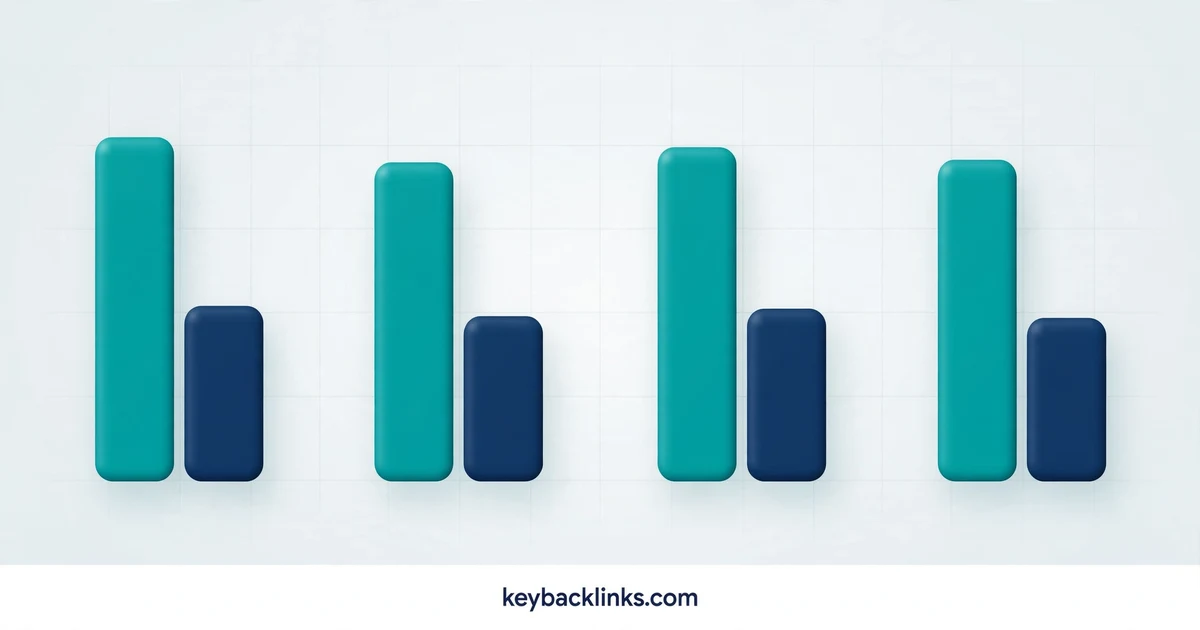
Example chart: strong vs weak example link profiles. Example data only, not real results.
The pattern is the point. The weak profile wins on count and loses on every check that matters. If you only count links, the weak profile looks better. If you read the links, the strong profile wins clearly. That is why, when you ask do backlinks still matter, the answer depends on the link, not the count. Counting links without reading them is the most common mistake in link building.
Frequently Asked Questions
Do backlinks still matter for a small site?
Yes. However, one relevant link matters more than fifty weak ones. A small site benefits most from links that help its pages get found and understood.
Do backlinks still matter more than good content?
No. A link points to a page, and if the page does not answer the reader question, the link cannot fix that. Content comes first. In addition, links support content that already deserves to be found.
How many backlinks do I need?
There is no set number. Any tool or seller that gives you one is guessing. Judge your profile by relevance, context, and trust, not by a target count. For example, compare your profile with similar pages on the same topic. Then keep the links that pass the three tests.
Conclusion
So, do backlinks still matter? Yes, when they are relevant, in context, and from a page readers trust. They help search engines find pages. They also help search engines understand what those pages cover. In addition, they help search engines judge whether other sites trust them.
They do not help when they are irrelevant, hidden, or bought. In addition, no count of weak links replaces one good one. Judge each link by the three tests, record what you find, and spend your time earning links that pass them. For a simple routine to track them, see our guide on how to monitor backlinks.