
Technical seo audit services give you an outside expert review of how search engines crawl, render and index your site. A specialist team runs deep crawls, checks the evidence, and reports the faults that hold your pages back. You then fix the faults, or you ask the same team to guide the fixes.
Many sites carry hidden technical faults for years. Content looks fine in the browser, yet search engines see blocked pages, slow templates and tangled redirects. However, these faults rarely announce themselves. They surface as flat traffic, thin indexing and pages that never quite rank.
This guide explains how technical seo audit services work when you outsource them. It covers what a proper audit checks, the deliverables to demand in writing, and how pricing is usually structured. Finally, it shows how to verify the fixes and how to spot a weak provider before you pay.
When Outsourcing Beats an In-House Audit
Some teams can audit their own site well. They own the tools, they know the platform, and they have time to dig. However, many teams lack at least one of those three things.
Outsourcing makes sense when no specialist sits on your team. It also helps after a redesign or a platform migration, when new faults hide inside fresh templates. Similarly, it helps when traffic drops and nobody can explain why. An outside reviewer sees the site with fresh eyes, and fresh eyes catch familiar blind spots.
Certain symptoms should trigger an audit quickly. For example, an indexing drop after a release often points to a template or settings fault. A slow fall in clicks, with no content change, can point to crawl or duplication problems. Similarly, a site that gains pages but not traffic often publishes content that search engines cannot read cleanly. An audit names the cause before you spend more on content.
An in-house review also carries a quiet bias. Teams defend choices they made themselves, even when the data argues against them. In contrast, technical seo audit services answer only to the evidence. They can name a painful fault without defending a past decision.
Finally, size matters. A crawl of a few hundred pages is a weekend job. A crawl of tens of thousands of pages, with log data and rendering checks, is a project. Outside help turns that project into a managed deliverable with a deadline.
Timing matters too. An audit lands best before a busy season, a relaunch or a content push. Then fixes can go live before the extra traffic arrives. If you plan a big campaign, book the audit first.
What Technical SEO Audit Services Actually Cover
A thorough audit checks how search engines find, read and store your pages. Good technical seo audit services work through the same core areas on every site. Then they adapt the depth to your platform and your goals.
Google’s SEO Starter Guide explains the basic steps that help search engines understand a site. An audit goes further. It tests your site against those basics and hunts for the faults a checklist cannot see.
Crawling and Indexing
First, the audit checks whether bots can reach your important pages. It reviews your robots.txt file, your sitemap and your server responses. It also flags pages that return errors or sit behind blocks by mistake. Next, it compares the pages Google has indexed with the pages you want indexed. Gaps between the two lists point to crawl waste, duplicate versions or blocked sections. Each gap needs a cause, not a guess.
Rendering and Page Experience
Search engines render pages, so the audit renders them too. It checks that key content and links appear in the rendered version, not only in the raw code. It also reviews Core Web Vitals, which measure loading speed, responsiveness and layout stability. Poor scores often trace back to heavy images, slow templates or third party scripts. A good report names the template behind the problem, so your developer can fix many pages at once.
Duplicates, Redirects and Canonical Signals
Duplicate pages split your signals and confuse search engines. The audit hunts for near-identical pages, parameter copies and mixed protocol versions. It also maps your redirects and flags chains, loops and hops to dead pages. Canonical tags get the same treatment. Each canonical should point to the version you truly want indexed. When these signals conflict, rankings suffer quietly.
Internal Linking Structure
Internal links guide bots and readers towards your key pages. The audit counts how many links each important page receives. It also finds orphan pages, which sit in the sitemap but receive no internal links at all. Weak anchor text gets flagged as well. Our on-page SEO page shows how page level signals work together. An audit simply checks whether your structure supports those signals across the whole site.
Site Architecture and URL Structure
Site architecture decides how easily bots move from your homepage to your deepest pages. The audit maps your click depth and flags important pages buried several levels down. It also reviews your URL structure. Short, readable URLs with consistent patterns are easier to crawl, share and maintain. Finally, it checks that menus and breadcrumbs match the structure your sitemap promises. Mismatches between them waste crawl effort and confuse readers too.
Security and Technical Health
Above all, the audit confirms the basics that protect everything else. It checks that your site serves over HTTPS and that certificates stay valid. It also flags mixed content, where secure pages load insecure files. Then it reviews server errors, uptime signals and outdated software versions. These items look minor beside rankings. However, a single expired certificate can block your whole site from search results.
Log Signals in Plain Language
Server logs record every visit to your site, including visits from search engine bots. Log analysis shows which pages bots crawl often and which they ignore. It also reveals crawl effort wasted on error pages and endless filter combinations. Not every audit includes log work, because access and volume vary. However, on large sites it often explains problems that a crawl alone cannot.
Platform Notes: What Changes Between Platforms
The core checks stay the same on every site. However, each platform adds its own traps. Good providers name these traps early, because they shape the scope and the price.
WordPress Sites
WordPress powers many business sites, so its traps are well known. Plugins add scripts, and too many plugins slow templates down. Themes can also print duplicate headings or weak canonical tags. The audit checks plugin weight, theme output and permalink settings. It also reviews how your SEO plugin handles sitemaps, titles and indexing controls.
Online Stores
Stores add filters, sorting options and product variants. Each option can spawn extra URLs, and those URLs can flood the index with thin copies. The audit maps these parameter pages and checks how the platform handles them. It also reviews product and category templates closely, since small template faults repeat across thousands of pages.
Custom and Larger Sites
Custom builds give you control, but they remove the safety net of standard fixes. Rendering checks matter more here, especially on pages built with heavy JavaScript. Log analysis also earns its place, because crawl waste hides easily at scale. Above all, the audit should end with tickets your own developers can action without guesswork.
Deliverables to Demand in Writing
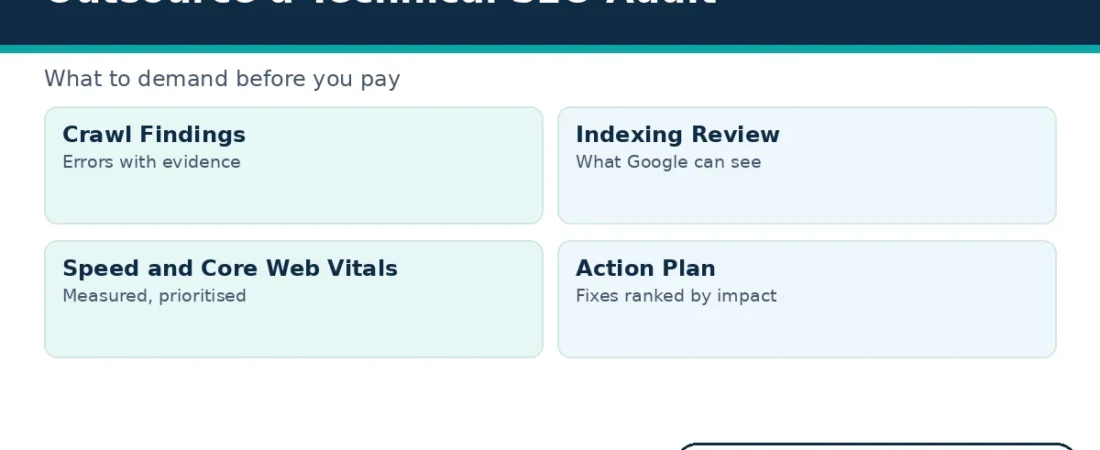
Before you pay for technical seo audit services, agree the deliverables in writing. A verbal promise of a full audit means very little later. A written scope protects both sides.
First, demand a prioritised findings list. Each finding should carry its evidence, its likely impact and its fix. Then demand the affected URLs, or a full export when the list runs long. Screenshots and crawl data should support every major claim.
Also agree a fix format your developer can use. Good deliverables read like tickets: problem, location, change needed and how to test it. A separate summary for managers helps as well. It explains the top risks in plain words, without the technical detail.
Above all, demand the raw data behind the report. The full crawl export belongs to you, not to the provider. With it, your own team can re-test any claim later. Without it, you own only opinions. Insist on this point in writing, because reports without data age badly.
Finally, agree what happens after the fixes. A re-check belongs in the scope, so the provider confirms each fix on the live site. Timelines belong there too, for the report and for the re-check. If link health sits inside the scope, our backlink audit checklist shows the separate checks a link audit needs.
How an Outsourced Audit Engagement Runs
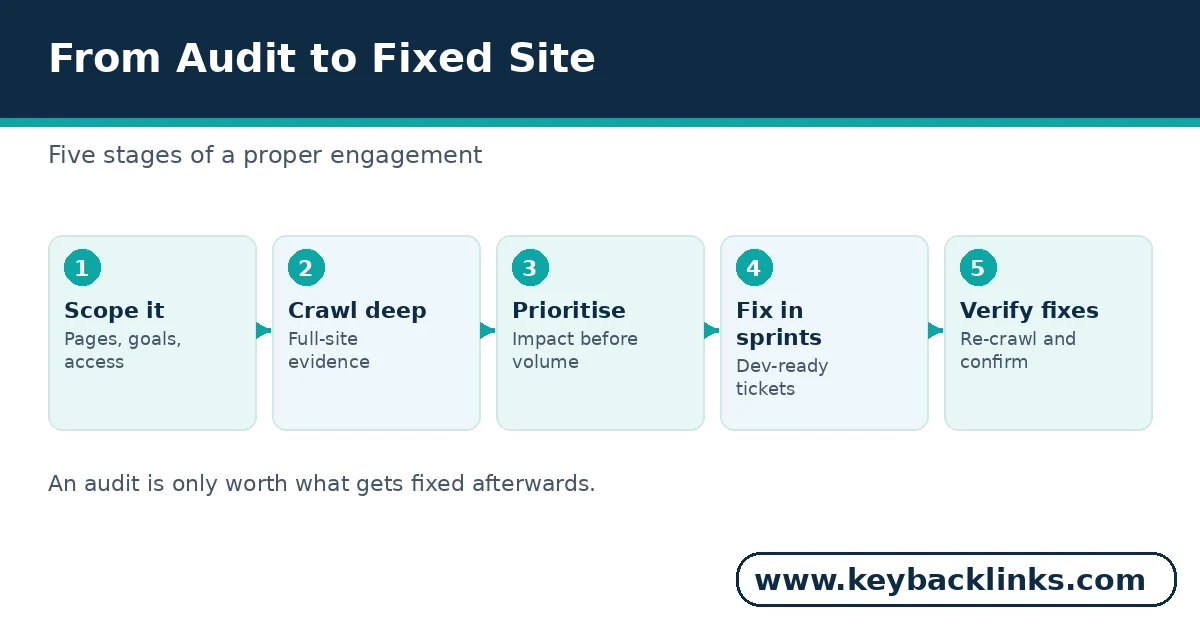
Most engagements follow the same five stages. First comes a scope call, where you share goals, access and deadlines. Next, the team crawls the site and gathers data. Then it analyses the findings and ranks them by impact.
After that, you receive the report and a walkthrough call. Finally, your team fixes the issues, and the provider re-checks the live site. Technical seo audit services feel predictable when each stage has a date attached.
Meanwhile, keep one owner on your side of the project. That person gathers access, answers platform questions and approves priorities. Then the outside team never waits on five different inboxes. In short, a named owner turns a good audit into a fast one.
Access decides the speed of stage two. Analytics, Search Console and server access help the team work faster. Share them early, through safe methods, and note any staging or test areas that crawls should avoid. Then the team spends its hours on findings, not on chasing logins.
What Good Evidence Looks Like: Sample Findings
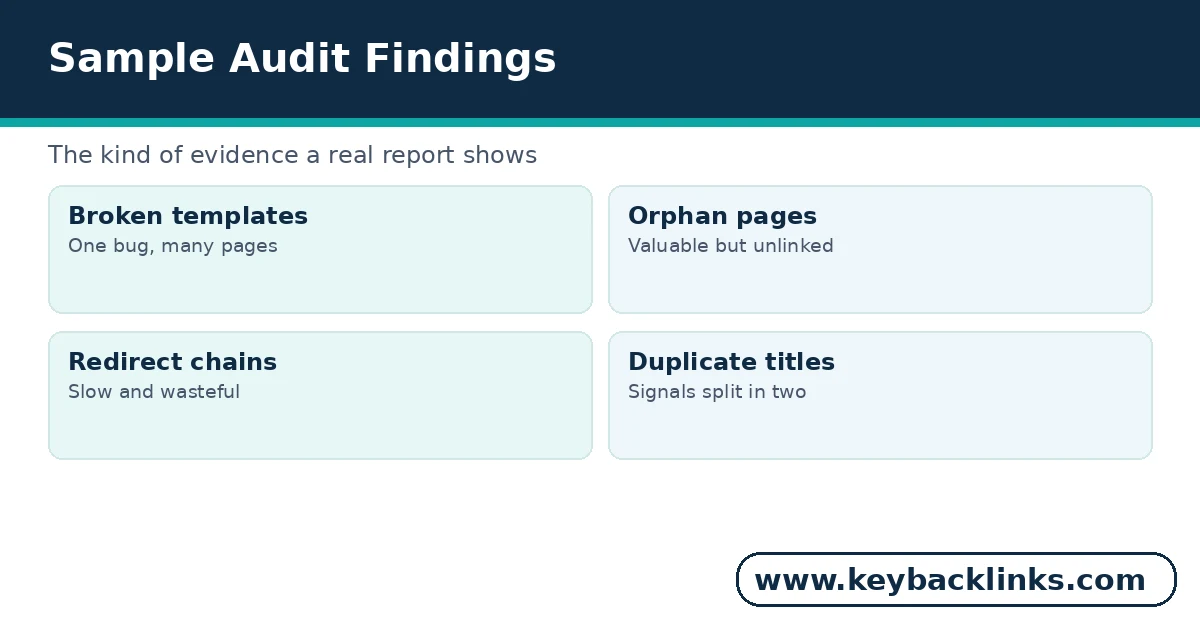
Strong findings share one trait: you can check them yourself. The table below shows the format to expect from technical seo audit services. Each example is generic, and your own report should carry your real URLs and your real data instead.
Notice what each row avoids. It avoids vague words like issues or problems without proof. It also gives your developer a testable fix. If a provider’s sample looks thinner than this, ask why before you sign.
How Pricing for Technical SEO Audit Services Is Structured
Audit pricing follows the work involved, not a standard rate card. Five drivers explain most quotes. First, page count matters, because a crawl of two hundred pages differs from a crawl of two hundred thousand.
Next, platform complexity matters. A simple brochure site audits faster than a store with filters, accounts and checkout flows. Template count matters too, since each template needs its own checks. Log analysis adds time, and so does fix support after the report.
Most providers quote a fixed fee for a defined scope. Some charge a day rate for open ended work. Others fold audits into a monthly retainer. Each model can be fair. Problems start when the scope stays vague, because a cheap quote often hides a shallow scan.
Therefore, ask each provider the same scope questions. Ask whether log analysis is included, and whether rendering checks cover your key templates. Also ask who writes the fix notes, and whether a re-check is priced in. Identical questions make quotes comparable, and vague answers reveal themselves fast.
Turnaround changes the price too. A rushed audit needs more hands on the same days, so providers charge for speed. In contrast, a flexible deadline lets the team fit the crawl around other work. State your deadline early, because it belongs inside the quote.
A sensible first step costs nothing. KeyBacklinks offers a free review through our website SEO audit page, which flags the headline issues on your site. Then you can judge whether a deeper, fully scoped audit is worth paying for, and you can compare quotes against real findings.
How to Verify the Fixes After Delivery
An audit only pays off when the fixes land correctly. Verification starts with a fresh crawl. Compare it with the original crawl, fault by fault. Closed faults should disappear, and no new faults should appear in their place.
Then spot check a sample of fixed pages by hand. Open the live URL, view the page source, and test it on a phone. Also check Search Console. Its page indexing report shows whether blocked or duplicate pages start to clear.
Core Web Vitals need patience. Field data builds from real visits, so scores update gradually after a fix. Recheck them over the following weeks, not the following day. Finally, keep the original report beside the new crawl. That pair of documents proves what changed, and it guides your next audit.
Keep a simple fix log as well. Note the date each fix went live and who made it. Later, when traffic moves, the log helps you link the change to the result. Without it, every improvement becomes a guess.
Also share the results with the people who ship changes. Developers, writers and marketers all touch the templates an audit judges. When they see the evidence, they stop repeating the faults. Therefore, one short walkthrough meeting protects the value of the whole project.
Also schedule the next check before you close the project. Templates change, plugins update and new pages ship every month. Therefore, many sites repeat a lighter audit once or twice a year. Each repeat starts from the last report, so the work stays fast and focused.
Red Flags When You Buy an Audit
Some offers look professional and deliver very little. The clearest red flag is a huge PDF with no priorities. A hundred pages of raw charts tell you everything and nothing. Real technical seo audit services rank their findings, because your team cannot fix everything at once.
Another red flag is the automated scan sold as an audit. Tools produce useful data, but a tool cannot judge context or trade offs. If nobody can explain a finding on a call, the finding came straight from a scanner.
Also beware findings with no URLs attached. A claim you cannot check is a claim you should not pay for. Guaranteed results belong on the same list, since no provider controls search engines. Finally, avoid any provider who refuses a post fix re-check. That refusal tells you how much they trust their own report.
Frequently Asked Questions
What do technical seo audit services include?
They include a deep crawl of your site, checks on indexing, rendering and page speed, and a review of duplicates, redirects and internal links. You also receive a prioritised report with evidence and fixes. A post fix re-check should close the work. In short, you buy the crawl, the judgement and the fix list.
How long does an outsourced technical audit take?
Small sites often take a few days of work. Large or complex sites can take several weeks, especially with log analysis. Access delays slow everything down, so share logins and data early. Your quote should state the timeline in writing.
Is an audit worth it for a small or new site?
Yes, if the scope fits the site. A small site needs a shorter audit, focused on indexing, templates and basic speed. Early fixes are cheap fixes, because templates are still few. However, skip the deep log work until your traffic justifies it.
What should I do when the audit report arrives?
First, walk through the top priorities with the provider. Then turn each finding into a ticket for your developer or your team. Fix high impact items first, and note the date of each change. Finally, book the re-check, so every fix gets verified on the live site.
Conclusion
Outsourcing works when the scope, the evidence and the re-check are agreed in writing. Choose technical seo audit services that show their evidence and rank their findings. Then fix in priority order and verify every change. Keep the report, the fix log and the re-crawl together. Together, they form the baseline for every future check.
Start with the free review on our website SEO audit page if you want the headline picture first. Or request a quote and tell us about your site, your platform and your goals. We will scope an audit that fits the site you actually run.