

Link reclamation is the work of finding links you already earned and getting them back. A site may mention your brand without a link, link to a page that no longer exists, or link to the wrong URL. In each case, the value was already created. You only need to find the gap and ask for a fix.
What Is Link Reclamation?
Link reclamation means recovering links that should already point to your site. It is not a new link building campaign. It is a clean-up job. You look for mentions, broken links, and wrong destinations, and then you ask the publisher to correct them.
For example, a recovered link is often easier to win than a brand new link. The publisher already knows your brand or your content. The page already exists. The context already fits. Your job is to make the fix simple and clear.
Why Recovered Links Are Worth Your Time
For example, a missing link is a missed connection. A reader who sees your brand name cannot click through to your site. A search engine also cannot follow a link that is not there. When you restore the link, you restore that path.
In contrast, a broken link is worse in some ways. A reader clicks and reaches an error page. That hurts trust and wastes a good placement. Fixing the destination helps the reader, the publisher, and your site at the same time.
Link reclamation also protects work you already did. If you spent time on research, tools, guides, or a useful page, a lost link means that work is harder to find. Recovering the link keeps that work visible.
Link Reclamation: Find Unlinked Mentions
An unlinked mention is a page that names your brand, your product, or your site without linking to it. These mentions are a good place to start, because the author already chose to write about you.
First, start with a list of names to check. Include your brand name, your main product names, and the names of people linked to your site, if that fits your work. Add common spellings and short forms. Keep the list short enough to check each month.
Next, search for each name in a backlink tool or a search engine. Look for pages that mention the name but do not link to your site. Check the page yourself before you act. Make sure the mention is real, the context is fair, and the page is still live.
Then, sort the mentions by value. A mention on a relevant page that already gets readers is worth more than a mention on a thin or outdated page. Focus first on pages that match your topic and that a reader would find useful.
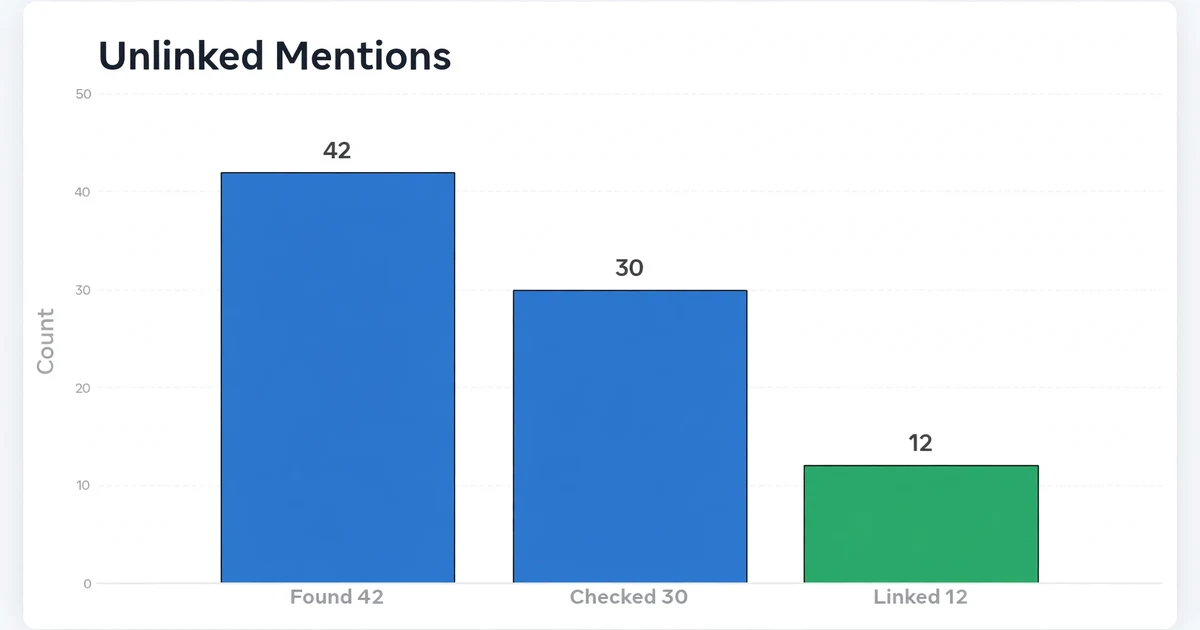
Example chart: the numbers shown are example data for illustration only.
Finally, record each good mention in a simple sheet. Note the page URL, the brand name used, the date you found it, and the contact you plan to reach. This record stops you from asking the same site twice.
Check Broken Links and Wrong URLs
Broken links happen when a target page moves, is deleted, or changes its URL. The link on the other site still points to the old address. The reader then reaches an error page.
First, start with your own site. Use Google Search Console to check which pages get link clicks and which URLs return errors. The Google Search Console Links report shows the pages that link to your site and the pages they point to. Use it to spot destinations that no longer work.
In addition, check your redirects. If a page moved, a redirect should send readers to the right place. If the redirect is missing or points to the wrong page, fix it on your own site first. Do not ask a publisher to fix a problem you can fix yourself.
However, wrong URLs are a separate problem. A publisher may link to your homepage when the link should point to a guide, or link to an old version of a page when a new version exists. Note the exact change you want. A clear before and after makes the request easy to accept.
Types at a Glance
For a full review of your link profile, use the backlink audit checklist. It helps you check source pages, target URLs, and redirects in one pass. For ongoing checks, the guide on how to monitor backlinks shows how to watch for new and lost links over time.
Link Reclamation Outreach: How to Ask for a Fix
Good outreach is short, specific, and polite. The publisher is doing you a favour. Your email should make that favour as easy as possible.
First, start with the exact page. Name the article, give its URL, and quote the sentence that mentions your brand or holds the broken link. The publisher should not need to search for the problem.
Next, explain the fix in one sentence. State the current link or the missing link, then state the correct URL. Keep the request to a single link per email when you can. A long list of changes is easy to ignore.
In addition, give a reason that helps the reader. A broken link hurts the publisher’s page too. A missing link makes it harder for readers to find the source. Frame the fix as a help to the page, not only as a gain for you.
Finally, keep your tone calm and human. Use the person’s name if you know it. Thank them for the mention or the article. Do not use pressure, flattery, or a threat to remove anything.
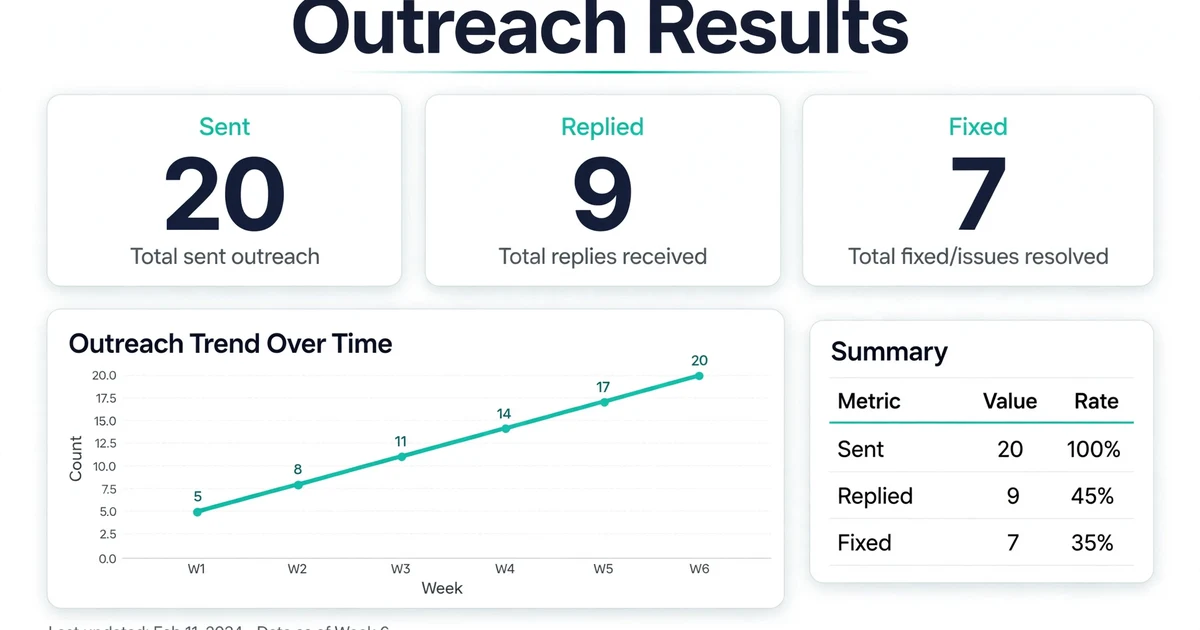
Example chart: the numbers shown are example data for illustration only.
What to Track After You Ask
First, track every request, or the work will drift. A simple sheet is enough. Record the site, the page, the type of fix, the date you sent the email, and the result. Update it when the link changes or when you decide to stop.
Next, check the link after a fix is promised. Open the page and click the link. Confirm that it points to the right URL and that the page loads. Note the date you verified it.
In addition, watch for new losses too. A link that was fixed can break again when a site changes its design or moves a page. Regular monitoring helps you catch that early. The guide on backlink monitoring for agencies shows a workflow that also works for a single site.
Example Results Summary
The table below uses example numbers only. These are illustration figures, not results from any real site or campaign.
Common Mistakes in Link Reclamation
First, one common mistake is asking for a link on a page that does not fit your site. If the mention is off topic or the page is low quality, a link may not help the reader. Skip those pages and focus on the ones that fit.
Second, another mistake is asking for the wrong page. If you ask for a link to your homepage when the mention is about a specific guide, the link will feel forced. Link to the page that matches the mention.
Third, a mistake is sending the same template to everyone. Publishers can tell when an email is copied. Add one line that shows you read the page. That small detail often decides whether you get a reply.
Finally, do not buy links to replace this work. Paid links that are meant to manipulate rankings break Google link spam policy. If a link is paid for, it must carry rel=”sponsored” or rel=”nofollow”, and it should not be presented as an earned editorial link. Link reclamation is about links you already earned, not links you buy.
Frequently Asked Questions
What is link reclamation?
Link reclamation is the process of finding links you already earned and getting them back. That includes unlinked mentions, broken links, wrong URLs, and links that were lost when a page changed.
How long does link reclamation take?
It depends on the publisher. For example, some fixes happen in a day. Others take weeks, or never happen. Send the request, follow up once, and record the result. Do not wait on one site before you move to the next.
Should I ask for a link on every mention?
No. In addition, ask only when the link helps the reader and fits the page. Skip mentions on irrelevant pages, outdated pages, or pages that do not match your topic.
What if a publisher does not reply?
Therefore, record the result and move on. One follow-up is enough. A polite request that gets no reply is not a failure. It is a normal part of outreach.
How is link reclamation different from link building?
In contrast, link building seeks new links from new pages. Link reclamation recovers links that should already exist. Both need good content, but reclamation starts with work you have already done.
Conclusion
Link reclamation is simple work with a clear payoff. Find the mentions, check the links, fix what you can on your own site, and ask politely for the rest. Keep a record, follow up once, and repeat the check each month.
Finally, start with your most valuable mentions and your most important broken links. Fix those first, then work down the list. Over time, the links you already earned will stay live, and readers will be able to find you.